标签归档 武汉品茶微信

通过admin

Henan strives to build 20 standardized wisdom islands throughout the year and incubate 200 competitive and innovative enterprises.

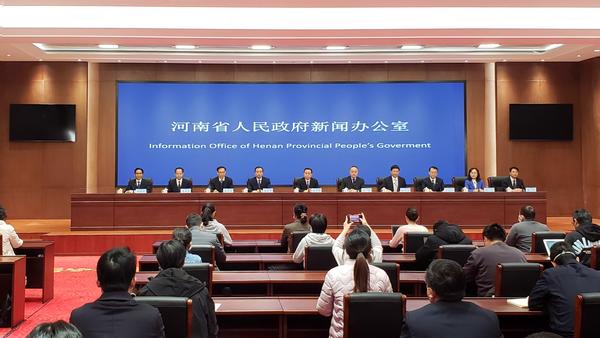
  On January 3rd, the Information Office of Henan Provincial Government held a press conference, focusing on the related work of vigorously boosting market confidence and promoting economic stability in Henan Province.

Wechat pictures _20230103093504

  Whether it is to expand investment, promote consumption, cultivate industries and strengthen the main body, it needs to be implemented in real projects, and it needs a high-quality carrier platform as a support to make the elements of development more concentrated and kinetic energy more concentrated. Which carrier platforms will Henan focus on? Ma Jian, Party Secretary and Director of the Development and Reform Commission of Henan Province, answered a reporter’s question at the press conference.

  Strengthen the industrial carrier

  Further play the role of the main position, main battlefield and main engine of economic construction in the development zone.

  At present, the development zones in Henan province have been integrated from 288 to 184, and the key reform tasks such as "three transformations and three systems" and "management Committee+company" have been basically completed. In the future, the focus of work will be shifted to industrial development, and all localities will be urged to focus on the responsibility of owners and go all out to attract investment, projects and services.

  Implement leapfrog development actions. Organize the work promotion meeting of development zones in the whole province, formulate policies and measures to promote the high-quality development of development zones, and carry out the establishment of industrial transformation demonstration development zones.

  Strengthen the "heroes on average". Scientifically and orderly promote the expansion and regulation of development zones, and establish a comprehensive evaluation system of input and output per mu and a differentiated allocation mechanism of resource elements.

  Strengthen monitoring and assessment. Improve the mechanism of monthly monitoring and quarterly notification, and organize observation activities in development zones.

  Be a carrier of precision agriculture

  Further strengthen the agglomeration effect of scientific and technological resources on platforms such as Zhongyuan Agricultural Valley.

  Recently, the provincial development and reform commission focused on the major needs of national seed industry and food security, and planned and laid out the Central Plains agricultural valley in a forward-looking way. Subsequently, the overall plan of "Central Plains Agricultural Valley" and the construction plan of the core area will be implemented as soon as possible, and a number of landmark seed science and technology innovation projects will be implemented to strengthen the dislocation linkage with Zhoukou National Agricultural High-tech Zone and accelerate the construction of 4 million mu of high-standard farmland demonstration zone, which will provide important support for building a solid foundation of a grain-producing province and helping to build an agricultural power.

  Be an excellent and innovative carrier

  Further build a first-class innovation ecosystem.

  Since last year, the provincial party committee and the provincial government have built an innovative carrier platform system with the integration and promotion of the "three-in-one" construction of the Provincial Academy of Sciences, the Central Plains Science and Technology City and the Zhengzhou Center for National Technology Transfer as the leader, supported by provincial laboratories, industrial research institutes, pilot bases and wisdom islands.

  As a development and reform system, the provincial development and reform commission will vigorously promote the construction of standardized wisdom islands, and strive to build 20 all-factor, low-cost, convenient and open wisdom islands throughout the year, and incubate and cultivate 200 competitive and innovative enterprises.

  Open carrier for living

  Further enhance the domestic and international dual-cycle link function of the airport area and the "Aerial Silk Road" international forum.

  The airport area is an important gateway to Henan’s opening to the outside world, and the "Aerial Silk Road" international forum is the only national forum with the theme of "Aerial Silk Road" in China. Henan will focus on the implementation of the institutional opening strategy, adhere to both soft and hard efforts, and jointly empower Henan Province to open to the outside world at a high level.

  On the hard side, it is mainly to further promote the "second venture" of the airport area. High-level preparation of the development plan of the airport port area in the new stage, deepening the expansion of the "double hub" cooperation model between Zhengzhou and Lu, implementing the action of improving the quality and efficiency of air cargo at Zhengzhou Airport, striving for the landing of the second base of China Post Aviation, and starting the construction of Zhengzhou Air Mail Processing Center.

  On the soft side, it is mainly to accelerate the institutionalization and platform development of the "Aerial Silk Road" forum. Explore and hold the International Cooperation Forum on the "Silk Road in the Air" in turn with Luxembourg, strive to become a sub-forum of the national "Belt and Road" international cooperation summit forum, link the Henan, China CIFIT, the overseas CIFIT in Luxembourg and other activities, launch and implement a three-year action plan to deepen cooperation with Europe, and attract a number of key industrial projects in the fields of automobiles, parts and semiconductors.

  "The provincial economic work conference specifically proposed that the port economy should be regarded as the starting point and breakthrough point for the high-quality development of Henan Province this year. We will continue to expand the airport, strengthen the dry port, develop the water port, promote the linkage between the comprehensive bonded zone and bonded logistics center and aviation, railway ports and various functional ports, gather various port-oriented industries with one port and one policy, and strive to achieve double-digit growth in cargo and mail throughput of Zhengzhou Airport, and operate more than 3,000 flights of Zhongyu in China-Europe trains. " Ma Jian said. (Song Xiangle, Wang Yizhen)

通过admin

Frequently asked questions about influenza vaccination this winter and next spring, Fujian CDC answers.

Influenza (referred to as "flu") isCaused by influenza virus infectionAcute respiratory infectious diseases.Influenza vaccination isAn effective means to prevent influenza.About influenza vaccination this winter and next springSome common questions,Fujian CDC answers are as follows↓↓↓

1. What are the antigenic components of trivalent and tetravalent influenza vaccines this year?

The trivalent influenza vaccine recommended by the World Health Organization (WHO) in 2023-2024 based on chicken embryos in the northern hemisphere consists of:

A/Victoria/4897/2022(H1N1)Pdm09 similar strain

A/Darwin/9/2021(H3N2)Similar strain

B/Austria/1359417/2021(Victoria department)Similar strain

The tetravalent influenza vaccine component contains two strains of B strain, namely the above three strains and B/Phuket/3073/2013.(Yamagata system)Similar strain.

Compared with the previous year, the vaccine component recommended by WHO in this year has been replaced with influenza virus subtype A(H1N1)pdm09 vaccine strain.

2. What kinds of influenza vaccines are available in 2023-2024?

Influenza vaccines listed in the world are divided into inactivated influenza virus vaccine, live attenuated influenza virus vaccine and influenza virus recombination vaccines.

According to the components contained in the vaccine, it is divided into trivalent and tetravalent influenza vaccines.

According to the production process, it can be divided into chicken embryo culture, cell culture and recombinant influenza vaccine.

Influenza vaccines used in China in the epidemic season of 2023-2024 include trivalent inactivated influenza vaccine (IIV3), tetravalent inactivated influenza vaccine (IIV4) and trivalent live attenuated vaccine (LAIV3).

Both IIV3 and IIV4 have 0.25ml dosage form and 0.5ml dosage form, and LAIV3 has 0.2ml dosage form.

3. Which key groups and high-risk groups give priority to influenza vaccination?

It is suggested that all people who are over 6 months old and have no contraindications should be vaccinated with influenza vaccine. Combined with the epidemic situation of influenza and the prevention and control strategy of multi-disease prevention, the harm of influenza should be reduced as much as possible.

Priority recommended key and high-risk groups:

1 medical personnel, including clinical rescue personnel, public health personnel, health and quarantine personnel, etc.;

2. Older people aged 60 and over;

3. People suffering from one or more chronic diseases;

4. Vulnerable people and employees in gathering places such as old-age care institutions, long-term care institutions and welfare homes;

5. Pregnant women;

6. Children aged 6-59 months;

7. Family members and caregivers of infants under 6 months old;

8. People in key places such as kindergartens, primary and secondary schools and supervision places.

4. What is the immune persistence after influenza vaccination?

The immunity acquired by human body after being infected with influenza virus or inoculated with influenza vaccine will decline with time, and the degree of decline is related to factors such as people’s age, physical condition and vaccine antigen.

A study on antibody dynamics of influenza vaccine in Australia showed that the antibody level induced by various vaccine strains reached a peak one month after vaccination, and began to decline about three months later. After vaccination for six months, the antibody level was still higher than the baseline, suggesting that the antibody protection level can be maintained for at least six months after vaccination.

A study in Taizhou City, Zhejiang Province also found that the antibody level mediated by some vaccine strains was still high after 6 months of influenza vaccination.

Studies have shown that the serum antibody level in the body decreased significantly after one year of influenza vaccination. Studies have shown that the decrease of serum antibody is related to the decrease of the number of bone marrow plasma cells, that is, the specific bone marrow plasma cells increased after 4 weeks of influenza vaccination, but decreased to the pre-vaccination level after 1 year.

In order to match the ever-changing influenza virus, one or more strains of influenza vaccine recommended by WHO will be updated in most seasons, and it also exists that the vaccine strains are exactly the same as the previous season.

In order to ensure the maximum protection of the vaccinated population, even if the composition of the influenza vaccine is exactly the same as that of the previous season, since the antibody titer produced by most vaccinators in the last vaccination has dropped significantly, it is still recommended to vaccinate before the arrival of the influenza season in that year regardless of whether the influenza vaccine was vaccinated in the previous season.

5. What are the requirements for the vaccination times of influenza vaccine?

Children from 6 months to 8 years old should be vaccinated with IIV vaccine: children from 6 months to 8 years old who are vaccinated with influenza for the first time should be vaccinated with two doses (two doses of the same vaccine should be selected) with an interval of ≥4 weeks; Children who have received one or more doses of influenza vaccine in 2022-2023 or before are recommended to receive one dose.

Vaccination of children aged 6 months to 8 years: No matter whether they have been vaccinated with influenza vaccine, only one dose is given.

Children and adults aged 9 and over only need one dose.

6. What are the taboos for influenza vaccination?

Anyone who is allergic to any ingredients contained in the vaccine (including excipients, formaldehyde, cracking agents and antibiotics) or has a history of severe allergic reaction to any kind of influenza vaccination is prohibited from vaccination.

Patients with acute diseases, severe chronic diseases or acute attacks of chronic diseases and fever are advised to be vaccinated after recovery or stable control of their condition. Patients with Guillain-Barre syndrome within 6 weeks after previous influenza vaccination are advised to be evaluated by a doctor before considering whether to vaccinate.

The following people are prohibited from being vaccinated with LAIV:

① Persons with low immune function due to drug use, HIV infection and other reasons;

② Children and adolescents who have been treated with drugs containing aspirin or salicylic acid for a long time;

③ Children with asthma aged 2-4 years;

4 pregnant women;

⑤ Those with a history of Guillain-Barre syndrome;

⑥ Those who used antiviral drugs such as oseltamivir and zanamivir 48 hours before inoculation, or those who used palamivir 5 days before inoculation, or those who used balosevir 17 days before inoculation.

7. Can influenza vaccine and other vaccines be vaccinated at the same time?

Inoculation with other inactivated and attenuated live vaccines:

Inactivated influenza vaccine can be inoculated simultaneously or sequentially with other inactivated vaccines and attenuated live vaccines; If two live attenuated vaccines are inoculated at the same time, the interval should be at least 4 weeks.

Inoculation with Covid-19 vaccine at the same time:

People aged 18 and above can be vaccinated with inactivated influenza vaccine and Covid-19 vaccine at the same time, and at the same time, they should be vaccinated at the inoculation sites of both limbs. For the minors who have been vaccinated with LAIV and under the age of 18, it is suggested that the interval between vaccination with Covid-19 and Covid-19 should be more than 14 days due to the lack of evidence at present.

8. When is the timing of influenza vaccination?

Usually, after 2~4 weeks of influenza vaccination, antibodies with protective level can be produced.

The time and duration of the annual peak of influenza activity are different in different parts of China. In order to ensure that the recipients can get immune protection before the high-incidence season of influenza, it is suggested that all localities arrange vaccination as soon as the vaccine is available, and it is best to complete immunization before the local influenza epidemic season. Vaccination units can provide immunization services throughout the epidemic season.

In the same influenza epidemic season, people who have completed the whole vaccination according to the vaccination procedures do not need to be vaccinated again.

9. Besides influenza vaccine, what other vaccines can be vaccinated to prevent respiratory infectious diseases?

In addition to influenza vaccination this winter and next spring, pneumococcal vaccine and Covid-19 vaccine are also recommended for the elderly and people with chronic basic diseases.

For children, it is suggested that non-immunization programs such as pneumococcal vaccine and Haemophilus influenzae type B conjugate vaccine should be inoculated on the basis of continuing immunization program vaccination. No matter whether it is an immunization program vaccine or a non-immunization program vaccine, the requirements of vaccination specifications should be strictly followed during the vaccination process.

10. How should we protect against influenza vaccine before it is produced?

Wear a mask scientifically. If you go to a closed environment and crowded places, take public transport or go to the hospital, it is recommended to wear a mask and pay attention to changing it in time.

Develop good personal hygiene habits. When coughing or sneezing, cover your mouth and nose with paper towels or towels. Wash your hands or disinfect your hands in time after touching public facilities such as elevator buttons and door handles, and after coughing or sneezing. In addition, daily attention should be paid to keeping the environment in the home and workplace clean, and opening windows regularly for ventilation.

Develop a healthy lifestyle. In daily life, we should keep enough sleep, adequate nutrition and proper physical exercise to enhance our physical fitness and improve our immunity.

通过admin

Feel the power of Atom. the installed measurement of Huaqing Q1900M motherboard

Huaqing Q1900M details, chip:

Wandering stars

  Configure the standard motherboard ATX 24pin power interface, and some motherboards use DC-IN external adapters for power supply.

Wandering stars

  From left to right, 2+1 USB front connector, 1 CMOS reset connector, 2 SATA 2.0 (3Gb/s hard disk interface), 1 Panel front panel connector and 1 Speaker connector are all marked with characters for easy connection. For HTPC, 2 SATA is just enough, 1 SSD is used as the system, and 1 mechanical hard disk is downloaded or backed up.

Wandering stars

  There is also a HD_Audio front audio connector, a TPM security module connector, an LPT printer port connector, and a COM port connector. The latter three connectors tend to be used in industry. Unfortunately, Huaqing Q1900M does not provide a front USB3.0 interface. If one of TPM, LPT and COM is changed to front USB3.0, I believe it is more practical for consumer players.

Wandering stars

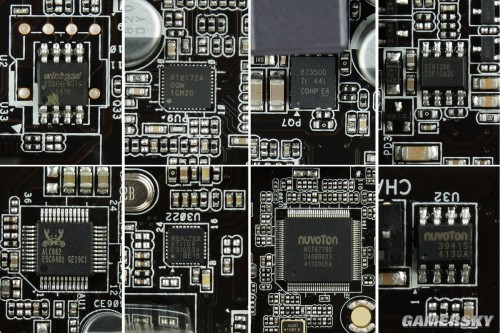
  Winbond 25Q64FWSIG BIOS chip

  Liqi Richtek RT8172A processor power supply management chip

  Dezhou instruments TI 87350D DrMOS integration upper and lower bridge

  Liqi Richtek RT8120B memory power supply management chip

  Ruiyu Realtek ALC622 audio chip

  Ruiyu Realtek 8111GR network chip

  Xintang technology Nuvoton NCT6776D hardware monitoring

  Fan control of xintang technology Nuvoton 3941S

  The main chips and power supply materials, if you search the given models, you will find that the same components often appear in the list of overclocking boards of Huaqing or other brands. Obviously, Huaqing Q1900M has not lowered the grade of materials because of the entry-level positioning of Intel Bay Trail -D desktop.

通过admin

Epidemic prevention and control dereliction of duty! Many people such as the director of Daqing CDC were exempted.

Cctv news(Reporter Li Wenxue): On September 5, the Organization Department of Daqing Municipal Committee of the Communist Party of China reported that many leading cadres, including the Municipal Center for Disease Control and Prevention, were dismissed due to dereliction of duty in epidemic prevention and control.

According to the report, since the outbreak of the COVID-19 epidemic, Wang Fengjing, director of the Municipal Center for Disease Control and Prevention, has failed to implement the epidemic prevention and control policy and has taken the main leadership responsibility; Li Jinbo, deputy head of Saertu District, failed to investigate the risk personnel and took important leadership responsibilities; Song Yongcai, director of the Market Supervision Administration Bureau of the High-tech Zone Management Committee, failed to supervise the prevention and control of the epidemic situation in the farmer’s market and took the main leadership responsibility; Wang Xibao, director of the Natural Resources and Construction Administration Bureau of the High-tech Zone Management Committee, is responsible for the poor management of community closure and control; Chen Yongfang, secretary of the Party Working Committee of Liming Street in High-tech Zone, did not implement the epidemic prevention and control measures in place, resulting in the risk of epidemic spread in the community under his jurisdiction and taking direct responsibility; Wang Hongbo, director of the market supervision administration of Saertu District and secretary of the party group, organized the farmers’ market to implement the epidemic prevention and control measures, and took the main leadership responsibility; Ma Zhen, vice president of Rand School, failed to investigate the risk personnel and took the main leadership responsibility; Xiao Guangyi, director and party secretary of Longfeng District Market Supervision Administration, organized the farmer’s market to implement the epidemic prevention and control measures, and took the main leadership responsibility; Ning Feng, the full-time deputy secretary of the Party Working Committee of the High-tech Zone, as the chief commander of the district epidemic prevention and control headquarters, failed to perform his duties and took the leadership responsibility; Wang Shixin, deputy director of the High-tech Zone Management Committee and member of the Party Working Committee, failed to supervise the epidemic prevention and control work in the farmer’s market and assumed important leadership responsibilities; Wang Weihua, deputy director of the High-tech Zone Management Committee and member of the Party Working Committee, is ineffective in the management of community closure and control and bears important leadership responsibilities; Zhao Wen, deputy director of the High-tech Zone Management Committee and member of the Party Working Committee, bears the leadership responsibility for failing to transport the isolated personnel in time;Zhang Jiawei, member of the Standing Committee of Sarthou District Committee and secretary of the Political and Legal Committee, bears an important leadership responsibility for the ineffective management of personnel in the temporary control area, the lax control of the control area, the false control of business premises and the lack of management of mobile vendors; Miao Lulu, deputy head of Longfeng District, is responsible for failing to transport the isolated personnel in time.

After research by the Standing Committee of the Municipal Party Committee, Wang Fengjing was removed from the post of director of CDC, Li Jinbo was removed from the post of deputy head of Sartu District, Song Yongcai was removed from the post of director of Market Supervision Administration of High-tech Zone Management Committee, and Wang Xibao was removed from the post of director of Natural Resources and Construction Administration of High-tech Zone Management Committee.

It is suggested that the Party Working Committee of High-tech Zone should be relieved of the post of Secretary of the Party Working Committee of Liming Street in Chen Yongfang High-tech Zone.

It is suggested that Sarthou District Committee should remove the post of Director and Party Secretary of the Market Supervision Administration Bureau of Saertu District, Wang Hongbo, and remove the post of Vice President of Ma Lande School.

It is suggested that the Longfeng District Committee be relieved of the post of director and party secretary of Xiao Guangyi Longfeng District Market Supervision Administration.

Ning Feng, full-time deputy secretary of the Party Working Committee of High-tech Zone, Wang Shixin, Wang Weihua and Zhao Wen, deputy directors and members of the Party Working Committee of High-tech Zone, Zhang Jiawei, member of the Standing Committee of Sarthou District Committee and secretary of the Political and Legal Committee, and Miao Lulu, deputy head of Longfeng District, were given informed criticism.

通过admin

Creative long picture | General Secretary is deeply concerned about people on the snowy plateau.

  Tibet is cold and oxygen-deficient, and the environment is hard. General Secretary of the Supreme Leader is deeply concerned about people living in this land. In July, 2021, when the Supreme Leader visited Tibet, he emphasized that to promote the high-quality development of Tibet, we should insist that all development should be given the meaning of national unity and progress, improve people’s livelihood and unite people’s hearts, and be conducive to enhancing the sense of acquisition, happiness and security of the people of all ethnic groups.

  People of all ethnic groups in Tibet bear in mind the earnest entrustment of the General Secretary, unite as one, forge ahead, and jointly paint a picture of high-quality development of Tibet’s economic prosperity and social stability.

↓↓↓Click on the picture↓↓↓


  Chief planner: Ren Weidong

  Chief producer: Xu Zhuangzhi

  Producer: Chu Guoqiang, Chang Ailing

  Planning: Qi Huijie, Zhou Ning and Ling Wei’s family

  Producer: Hu Guoxiang, Zhai Yongguan

  Final review: Zhang Shuqi Kang Lilin Jiang Chen.

  Reporter: Qiu Xingxiang Li Jian

  Design: Nie Yi

  Editor: Chen Qian Nie Yi

  Technical support: He Liu

通过admin

China’s e-commerce is developing rapidly and permeates all fields of social life.

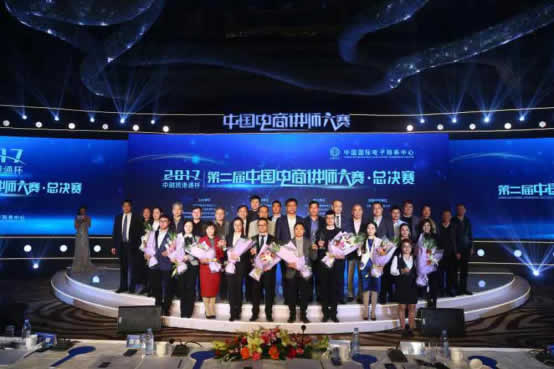
  CCTV News:At 14: 00 on December 28th, the 2nd China E-commerce Lecturer Competition (2017) was held in Beijing Kunlun Hotel, co-sponsored by China International E-commerce Center of the Ministry of Commerce, China Association for Continuing Engineering Education, E-commerce Teaching Steering Committee of Colleges and Universities of the Ministry of Education and National Foreign Trade Vocational Education Teaching Steering Committee of the Ministry of Education.

  In recent years, China’s e-commerce has developed rapidly, and has widely penetrated into all fields of social life, becoming an important way to promote economic transformation and upgrading, promote social and economic development, and promote mass entrepreneurship and innovation. However, at present, the contradiction between supply and demand of e-commerce talents is prominent, which has become the main bottleneck restricting the development of e-commerce in China.

  The key to developing e-commerce is talents, and the key to cultivating talents is teachers. According to the State Council’s Guiding Opinions on Actively Promoting "internet plus Action" and the State Council’s Opinions on Vigorously Developing E-commerce and Accelerating the Cultivation of New Economic Motives, the Outline of the National Medium-and Long-Term Talent Development Plan (2010-2020), the Ministry of Commerce’s Guiding Opinions on Accelerating the Training of E-commerce Talents and the Thirteenth Five-Year Development Plan of E-commerce, In order to find and cultivate e-commerce lecturer talents, improve the overall level of national e-commerce training, build an influential e-commerce training service system and promote the development of local e-commerce, China International E-commerce Center of the Ministry of Commerce, in conjunction with local governments, cooperative institutions and authoritative media, successfully held the first China E-commerce Lecturer Competition in 2016, and continued to launch the second China E-commerce Lecturer Competition "Zhongrong Cross-Hong Kong Cup" in 2017, which is open to universities, vocational colleges, industry organizations and the whole country.

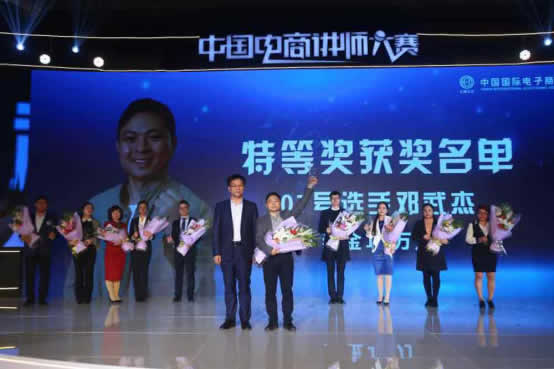
  This China E-commerce Lecturer Competition is conducted in six stages: player registration, primary selection, training, preliminary competition, semi-final competition and final competition. The contest is divided into East China, South China, Northeast China, Northwest China and Southwest China. East China is located in Suzhou, Jiangsu Province, South China is located in Jieyang, Guangdong Province, Northeast China is located in Shenyang, Liaoning Province, Northwest China is located in Yinchuan, Ningxia Hui Autonomous Region, and Southwest China is located in Kunming, Yunnan Province. This contest has received strong support from the Department of Commerce of Ningxia Hui Autonomous Region, Guangdong Province, Liaoning Province, Yunnan Province and Suzhou Industrial Park Management Committee. The contest was launched in October, and nearly 700 contestants signed up for the competition. After fierce competition in the preliminary round of the division and the national semi-final, the top 10 contestants successfully advanced to the national finals. After three rounds of competition, including "self-selected proposition", "prescribed proposition" and "ultimate PK", the top 10 players finally decided on the national championship of the second China E-commerce Lecturer Competition.

  Yao Guanghai, secretary of the Party Committee of China International Electronic Commerce Center, pointed out that the success of this competition will surely arouse the attention of all sectors of society on the construction of e-commerce talent training system, and further promote the healthy and rapid development of e-commerce nationwide.

通过admin

The cold air caused the temperature in the north to dive and ushered in the first snowfall in the second half of the year.

  BEIJING, Beijing, Oct. 10 (Xinhua)-The 9th is the first working day at the end of the Eleventh Golden Week. Beijing, Tianjin, Hebei and other places have experienced heavy rainfall, and Qinghai, Inner Mongolia and other places even ushered in the first snowfall this autumn. The cooling wind made it difficult for many office workers returning to work to adapt for a while, shouting "I want to wear long pants".

  According to the latest weather forecast, the temperature in Northeast China, North China, Shaanxi, Sichuan, Chongqing and other places will drop by 6-10℃ today and tomorrow, and the local temperature drop can reach 12℃. There is strong precipitation in the southeast of northwest China and North China, and moderate to heavy snow in parts of Ningxia and Gansu.

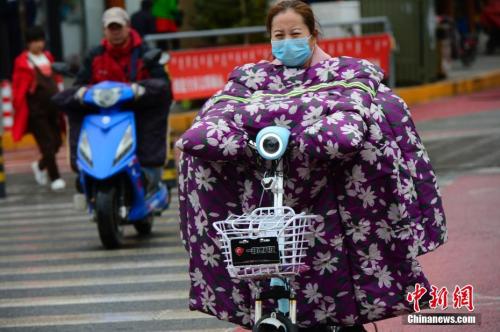
  On October 9, the temperature dropped sharply in many places in Inner Mongolia. On the streets of Hohhot, pedestrians riding electric cars put on "cotton-padded clothes" to travel. China News Service reporter Liu Wenhua photo

  Just entering October, I "want to wear long pants"

  — —Rainfall in many places in the north has cooled down, and the local temperature drop has exceeded 10℃

  In October, after enjoying the Golden Week holiday, office workers need to overcome not only the "holiday syndrome", but also the windy and cool weather. With the arrival of cold air, there has been a sharp cooling in many places in the north in recent days. On social platforms, many netizens shouted "to wear long pants" in their circle of friends.

  According to the report of the Central Meteorological Observatory on the evening of the 9th, due to the influence of cold air, at 14: 00 on the 9th, compared with 14: 00 on the previous day, the central and eastern Jilin, Liaoning, central Inner Mongolia, northern Hebei, western Shanxi, central and northern Shaanxi, Ningxia, central and southern Gansu and other places experienced a temperature drop of 6-8 C, and the local temperature drop reached 10-12 C.

  In addition, heavy rainfall, fog and other weather in many places have also added traffic pressure to the first working day after the Golden Week. Among them, Weibo Meteorological Beijing, the official of Beijing Meteorological Bureau, reported that the average precipitation in Beijing reached 29.8 mm from 4: 00 to 16: 00 on the 9th.

  According to media reports, on the morning of the 9 th, the rainy and foggy weather in Beijing continued, and several high-speed sections of Jingha, Beijing-Tianjin and Jingping were closed; Rain and fog also affected flights at the Capital Airport. As of 11: 00 on the 9th, more than 100 inbound and outbound flights were delayed and more than 50 flights were cancelled.

  Cold air comes with snow

  — — Many places welcomed the first snowfall in the second half of the year, and the temperature hit a new low in the second half of the year.

  In addition to strong winds and rainfall, snowfall occurred in some places in the north. According to a report from the Central Meteorological Observatory on the evening of the 9th, 1-7mm snowfall or sleet occurred in central Gansu, eastern Qinghai and central Inner Mongolia during the daytime on the 9th.

  According to media reports, due to the influence of cold air, Xining, Qinghai Province ushered in the first snowfall since autumn on the 9th. The daily minimum temperature dropped to 0.9℃, and the temperature hit a new low since the second half of this year. The meteorological department of Qinghai Province issued several yellow warnings for cold waves.

  The staff of Qinghai Meteorological Bureau told the media that the first snow in Xining this year was 20 days earlier than last year, and the low temperature weather will continue. It is understood that at present, Xining has not yet entered the heating season, but due to the obvious drop in temperature, citizens have put on winter cotton clothes and masks.

  Some areas in Inner Mongolia also ushered in the first working day after a long holiday in the wet and cold. According to media reports, the first snowfall occurred in many places in Inner Mongolia since the second half of the year, with obvious snowfall in Alxa League, Bayannaoer, Baotou, Wulanchabu and Hulunbeier. The snowfall time in central and western Inner Mongolia was the earliest in recent 10 years, and the maximum snow depth in Hulunbeier boketu has reached 13 cm.

  Zhang Fanghua, chief forecaster of the Central Meteorological Observatory, said that the cold air process affected a wide range and lasted for a long time, with a large cooling range, long precipitation duration and large accumulated precipitation in the northern region.

  Zhang Fanghua suggested that the cold air process not only brought about obvious cooling, but also accompanied by a wide range of precipitation weather, and the body temperature will be very low, and the temperature in most areas in the next 10 days will be lower than that in the same period of the year. At present, most areas have not been centrally heated, and the public needs to take cold-proof and warm-keeping measures.

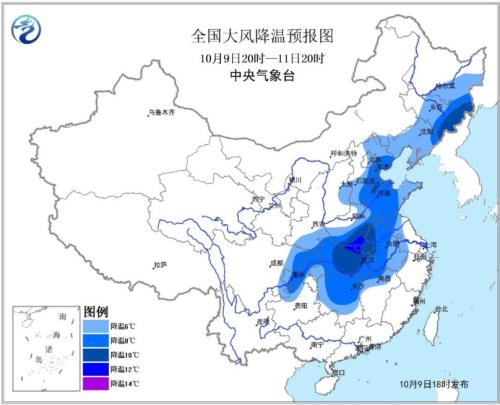
  National gale cooling forecast map (from 20: 00 on October 9 to 20: 00 on October 11). Image source: Central Meteorological Observatory official website

  Cold air will continue to go south.

  — — The cumulative cooling range in Wuhan and Chongqing can reach 15℃

  As the saying goes, an autumn rain is cold, and ten autumn rains put on cotton. In the next few days, the cooling weather will continue.

  According to the official website news of the Central Meteorological Observatory, it is estimated that there will be a temperature drop of 6-10℃ in the central and eastern parts of Northeast China, most of North China, southwestern Shaanxi, northeastern Sichuan, Chongqing, Huanghuai, Jianghan, Jianghuai and northern Jiangnan from 20: 00 on the 9th to 20: 00 on the 11th, and the local temperature drop can reach 12℃. There are 4-6 winds in most of these areas.

  For example, under the influence of rain and cold air, the temperature in Beijing will continue to drop. According to media reports, the highest temperature in Beijing during the day on the 10th was only 11℃, and the lowest temperature in the morning on the 11th will drop to 7℃, both of which will hit new lows since the second half of this year.

  In addition, the cold air continues to go south. According to media reports, Hubei will usher in a "roller coaster" decline in temperature from the 10th, and the highest temperature in northwest Hubei will be the first to drop to 18-21 C; On the 11th, the temperature will drop further, and the highest temperature in Wuhan will drop to 16℃, and the cumulative cooling rate can reach 15℃.

  According to local media reports in Chongqing, a cooling and rainy weather process began in Chongqing on the evening of the 9 th, which lasted until the 12 th, and the daily average temperature will drop by 6-9 C. From the perspective of the whole city, the highest temperature will drop from 33℃ to 18℃, and the cooling rate will be as high as 15℃.

  In addition, it is expected that there will be heavy rain and local heavy rain in parts of Sichuan, Shaanxi, North China, Liaoning and Jilin from 20: 00 on the 9 th to 20: 00 on the 10 th; In Inner Mongolia, Hebei, Shaanxi, Ningxia, Gansu, Qinghai and other places, rain will turn to sleet or snowfall. Among them, there are moderate to heavy snow in parts of southern Ningxia and central Gansu, and there are heavy snow in mountainous areas.

  It is understood that on October 12, the cold air force will weaken and the cooling will end. At that time, only Jiangnan and northern South China will have a temperature drop of 2 C to 4 C.

通过admin

The American Democracy Foundation funded 50 China projects to support anti-China forces.

  A "non-governmental organization" solely funded by Congress.


  Everyone in the United States emphasizes its status as a "non-governmental organization", but as long as we understand its funding source and organizational structure, we know that the Democratic Foundation is actually a US government department in the cloak of "non-governmental".


  The practice of promoting "American-style democracy" in a hidden way originated after the end of World War II. In order to prevent communist party’s influence from expanding in Europe, American policymakers began to subsidize pro-Western media and political parties in the form of secretly sending consultants, equipment and funds. By the end of 1960s, some American "private groups" began to receive secret funds from the CIA, which were also used to weaken communist party’s influence. These "private groups" later grew into "American Political Foundation", which is the predecessor of American Democracy Foundation.


  In November 1983, US President Ronald Reagan ordered the establishment of the American Democracy Foundation, and asked Congress to allocate $65 million for "promoting global democracy" in the fiscal year of 1984-1985. In addition to funding from Congress, the board structure of the American Democracy Foundation makes this "non-governmental organization" even more weird, because its members include two members of Congress, officials of American labor, business and education institutions, foreign policy experts, and representatives of Republicans and Democrats. John Richardson, the first "permanent chairman" of the Democracy Foundation, was a former assistant secretary of state. The current chairman, Carl Jeshman, was a senior adviser to the Permanent Representative of the United States to the United Nations.


  The Democratic Foundation initially sought funding of $31.3 million a year, but Congress only gave it $18 million. Even so, some opponents of the Democratic Foundation in Congress suggested to the White House that since the Democratic Foundation is "non-governmental", it should not be appropriated by the US Congress, but should absorb donations from the people. However, the US Congress still insists that all the funds of the Democracy Foundation are allocated by the Congress, and it has repeatedly intervened in the projects of the Democracy Foundation, often giving it "specific guidance". For example, the US Congress asked the Democracy Foundation to support solidarity trade unions in Poland and "special interest groups" in Chile, Nicaragua and Eastern Europe. The US Congress also asked the Democracy Foundation to "give special support" to relevant organizations in South Africa, Myanmar, China, (China) Tibet and North Korea. After the "9.11" incident, the Democracy Foundation threw out the third strategic document and began to sponsor a large number of projects in Middle Eastern countries.


  At the same time, the amount of funds allocated by the US Congress to the Democracy Foundation is actually increasing: from the initial "quota" of $33 million to $40 million in 2004, and then jumped to $60 million in fiscal year 2006. In fiscal year 2008, the annual appropriation of the American Democracy Foundation was $100 million.


  It is the executor of American strategic intention.


  The American Democracy Foundation is very good at bringing together various "democracy foundations" in western countries to do their work. For example, in order to promote the democratic process in Myanmar, the American Democracy Foundation has brought together the Westminster Democracy Foundation in Britain, the Conrad Foundation in Germany and the International Center for Human Rights and Democratic Progress in Canada, and contributed to the "Democratic Forces in Myanmar". When dealing with China, North Korea and other Asian countries, the American Democracy Foundation mainly draws on Japanese, Italian and Portuguese "Democracy Foundations".


  How does the American Democracy Foundation approve a project? An expert familiar with the operation of the Foundation told the Global Times reporter that there are two sets of audit procedures for the American Democracy Foundation: a clear set of procedures is published on the official website, such as quarterly discussion and evaluation by the Board of Directors of the Democracy Foundation, which comprehensively considers the priorities, specific needs, national conditions, democratic effects and related experiences of the project, and then grants money to groups or organizations. Applicants should fill in a series of forms, such as project details, expenditure, budget plan, name and position of the person in charge of the organization, etc. The China expert told the Global Times reporter, "Whether the American Democracy Foundation gives money or not is mainly based on the degree of influence of this project on the national interests of the United States, the destructiveness to relevant countries, and the degree of recognition of American-style democracy by relevant organizations or groups. In the final analysis, the interests of the United States are fundamental. If it is not in line with the national interests of the United States, it is difficult to get a penny from the Democracy Foundation. "


  Kim A. Holmes, vice president of the Center for Foreign Affairs and National Defense Policy Studies of the United States, and Sherby Kurom, director of the Institute of International Relations of the Heritage Foundation of the United States, disclosed that on August 1, 1996, the Appropriations Committee of the United States Senate tried to cancel the funding of 30 million U.S. dollars to the Democracy Foundation that year, on the grounds that although the Democracy Foundation played an important role in "promoting democracy" in the Soviet Union, China, Cuba, Iran, Iraq, Nicaragua, Vietnam and other countries, the Cold War was after all. However, U.S. lawmakers who support continuing funding for the Democracy Foundation said that despite the disintegration of the Soviet Union, communist party remained in power in China, Cuba, North Korea and Viet Nam, and communist party’s influence in the former Soviet republics remained considerable, so communist party’s global power should not be underestimated. Lawmakers believe that governments under western-style democracy pose less threat to the interests of the United States. Because they pursue profits and are keen on business activities, they are more willing to maintain international stability. Democratic countries rarely go to war with democratic countries, so strengthening the promotion of democracy, such as investing in the American Democracy Foundation, is much less costly than going to war with an "undemocratic country", which is in the best interests of the United States. ▲  

Editor: xu wen hua

通过admin

Sixty years of Chinese Pinyin-Latinized new characters, and everyone strives to be a passionate era of Cang Xie.

February 11th this year marks the 60th anniversary of the National People’s Congress’s approval and promulgation of the Hanyu Pinyin Scheme (February 11th, 1958, approved and promulgated by the Fifth Session of the First National People’s Congress). Since the implementation of hanyu pinyin, it has achieved fruitful results: at home, it has become an important tool to read Chinese characters, eliminate illiteracy and learn Putonghua; Internationally, it has become the standard of transliteration of Chinese characters in Latin. The birth of the Chinese Pinyin Scheme is closely related to the implementation of Latinized new characters in people’s lives since the 1930s, and some features of Latinized new characters have been absorbed in the Chinese Pinyin Scheme. The Latinized New Characters Movement is also a colorful chapter in the history of Chinese language and writing. It is a passionate era in which everyone designs Pinyin and strives to be a Cang Xie in order to save the country through education.

The Latinized Textbook published in Shanghai in 1935

Origin: the birth of Latin new characters in northern dialect

The Latinized New Characters is a Chinese phonetic alphabet scheme that was implemented among the masses from the early 1930s to 1958 before the announcement of the Chinese phonetic alphabet scheme. It played an important role in China’s character reform movement and was the predecessor of Chinese Pinyin. Compared with other previous pinyin schemes, such as Wittoma-Zhai Lisi Pinyin (see the article "The most famous Chinese-English dictionary in the first half of the 20th century, including the pronunciations of 12 dialects" published by The Paper Fanshu Party on April 28, 2017) and the Romance of Mandarin (see "The Romance of Mandarin, the Failed Attempt of the Elite to Rebuild Civilization" published by The Paper Private History on January 12, 2018). Another major difference is that the first two were designed by sinologists and domestic linguists from Western consulates in China. However, Latinized new characters are a phonetic scheme invented by left-wing intellectuals and attracted the participation of the public.

Qu Qiubai

In April 1928, Qu Qiubai went to Moscow to preside over the upcoming Sixth National Congress of the Communist Party of China. At this time, it was the climax of the Soviet Union’s campaign to eliminate illiteracy, and the literacy target also included 100,000 Chinese workers in the Far East of the Soviet Union. In September, 1928, the Nanjing National Government College (once renamed as the College by the Ministry of Education) officially published the French Pinyin of Roman Characters in Mandarin, which was drawn up by the "Several People’s Association". Like Lu Xun, Qu Qiubai thinks that the Roman characters in Mandarin are a scheme formulated by scholars in the study, which is divorced from reality; Chinese, who was in the Soviet Union at that time, also believed that Latin alphabet literacy should be faster than Chinese character education. Therefore, he is determined to create a set of pinyin schemes that are more suitable for the public.

In February, 1929, with the help of Soviet sinologist Guo Zhisheng (C·B·Колокопов), Qu Qiubai drew up the Draft of Latin Alphabet of China. In October, the plan was finalized and finally named "The Latinized Letters of China". In the spring of 1930, "The Latinized Letter of China" was first published in the No.2 issue of Moscow’s "China Question" magazine, and then a one-line booklet was published by China Workers’ Communist University Press, which caused great repercussions. The booklet is printed in Chinese characters, Latin new characters and Russian, and its contents are in three aspects: first, it talks about the difficulty of learning Chinese characters and the possibility of pinyin of China characters; The second is to talk about whether it is necessary to note the tone; The third is the scheme and spelling.

The Latinized Letters of China.

In September, 1931, Vladivostok held the first congress on the Latinization of China characters, and determined the plan for the Latinization of new characters. However, because the Chinese workers in Vladivostok are basically northerners, in fact, the plan adopted by the conference is only one kind of Latin new characters in the northern dialect. Its phonetic standard is close to the old national sound established by the "Pronunciation Unification Conference" in 1913 (see The Paper Private History, June 25, 2017, The Attempt of phonetic chinese characters Without Inheritance: The History of Phonetic Symbols). Beila, as the predecessor of Chinese Pinyin, has a high similarity. The main differences are:

First, distinguish the sharp group sounds, and see the postal pinyin of word processing, even if it is palatalized, it is spelled without palatalization. Example: giu (9), ziu (wine).

Second, do not write empty rhymes (vowels on the tip of the tongue), I only mark vowels [i]. Example: z (word).

(3) ? [y] of Chinese Pinyin, and writing y in new characters; However, y[j], which is used as a prefix by Chinese Pinyin, is defined as J in new characters, but it is only used to separate syllables in the middle of words.

Fourth, the er of Chinese pinyin, writing r in new characters.

Fifth, the tone is not marked, and the tone is regarded as an element that should be removed from Chinese. Save only a few that are extremely necessary and easily confused, and distinguish them by changing spelling, for example: jou (You), ju (You), maai (Buy), mai (Sell), Shansi (Shanxi) and Shanansi (Shaanxi);

Sixth, direct spelling of foreign words, for example: Latinxua (Latinization).

A New Latin Writing Scheme for Northern Dialect

The Congress also formulated thirteen principles of Latin new characters. Generally speaking, Chinese phonetic characters must be modernized, internationalized, popularized and dialectalized. Proceeding from the national conditions at that time, the Congress advocated that all dialects in China should be covered as far as possible in letter design, and each dialect could be written by itself. Popularization and dialectalization are the biggest differences between new characters and Guoluo, and Guoluo has clear phonetic standards, as Lu Xun later said: "Now China is not unified by one language, so it is necessary to spell according to the languages of different places and communicate in the future." (Lu Xun’s "On New Characters") In addition, due to the limitations of the times, the General Assembly, like the Guoluo School, believes that Chinese characters should be abolished.

On March 16th, 1950, Ningbo People’s Daily reprinted the Thirteen Principles of New Characters in China.

After the scheme was determined, in a short time, great progress was made in latinized new characters. By November 1933, the Far East had published 47 books in new languages, with a total of more than 100,000 copies printed.

Spark: the practice of Latin new characters in Ningbo dialect

In the early 1930 s, although overseas education on new characters had been carried out in full swing; At home, because the Kuomintang blocked the news, the public didn’t know the new characters at first. Fang Shan Jing (pen name Jiao Feng, a native of Zhenhai, Zhejiang), an esperantist, was the first to introduce new Latin characters to China. In 1933, after he saw Xiao San’s "Latinization of Chinese Calligraphy" in the publication "New Stage" of the Esperanto organ, he translated it into Chinese, which attracted the attention of domestic cultural circles. In October of the same year, Fang Shanjing published "The Latinization of Chinese Calligraphy", calling for vigorously promoting new characters.

Fang Shan territory

Shanghai is the center of the Latin New Character Movement. In 1934, the debate on popular language began in Shanghai cultural circles. Lu Xun and others criticized Wang Maozu and other old literati’s perverse ideas at that time, such as "abolishing vernacular", "restoring classical Chinese" and "advocating respecting Confucius and reading classics", which also promoted the movement of Latin new characters. Ye Laishi, a character reformer (formerly known as Bao Shuyuan, a native of Wuxian County, Jiangsu Province, who has served as secretary-general, deputy director and consultant of the China Character Reform Committee since the founding of the People’s Republic of China) pointed out in Popular Language, Dialect and Latinization: "Dialect characters (pinyin characters written in dialects) are a sharp weapon to eliminate illiteracy". It is an important stage of the development of popular language, which is mutually promoted and closely combined with the popular language movement. Therefore, it actively advocates the latinization of dialect areas everywhere. On October 13th, Lu Xun published an article, saying that new characters are a sharp weapon for literacy: "But in China, only about two-tenths of the population are literate, and of course there are fewer people who can write … until the proposal of Latinization appears, this is the key to solving the problem." (Lu Xun’s essays on Jiejieting, the rebirth of China language).

Ye Laishi

In August of that year, Ye Laishi and others set up the Chinese Latinization Research Association in Shanghai, and began to spread the new Latin characters. The first thing the seminar did was to publish a booklet introducing new characters, The Latinization of Chinese Writing-Theory, Principles and Scheme. In November, Speech Science, the journal of esperanto association, published the Latin Draft of Ningbo Dialect in Fang Shan, which proved that the new characters can be popularized and dialectomized. This exciting practice has greatly expanded the influence scope of Latinized new characters.

The Latinization of Chinese Writing-Theoretical Principle Scheme

The biggest reason why Lu Xun supports new characters is that they are easy to learn. "As long as you know 28 letters and learn a little spelling and writing, anyone can write and understand them except slackers and imbeciles. And it also has the advantage of writing quickly. " (Lu Xun’s essays on Jiejie Pavilion, Talking about Foreign Languages) In March 1935, Mao Dun also published On New Characters, explaining his clear support position.

In December, 1935, the latinized new characters ushered in the most brilliant node in the history of sports. Tao Xingzhi initiated the establishment of the China New Characters Research Association in Shanghai, as the general meeting of the national new characters research groups, which played a great coordinating role for associations and workers all over the country. The seminar passed the "Our Opinions on Promoting New Characters" signed by 688 famous people from all walks of life in China, including Cai Yuanpei (he was the main supporter of Guoluo, but now he supports new characters), Sun Ke, Lu Xun, Tao Xingzhi and Chen Wangdao. The opinion said: "China has arrived in do or die (in 1996, the Japanese began to encroach on North China and set up the puppet regime’ Jidong Anti-Communist Autonomous Government’), and we must educate the public … The new characters that China people need are pinyin new characters." In the opinion, six specific suggestions were put forward to promote the new characters.

Latinized Chinese character reading "Everyone forms a heart"

Start a prairie fire: the spread of Latin new characters in popular language

Wu Zhihui, president of "Pronunciation Unification Association", once recalled that there were various pinyin schemes collected at the meeting in 1913, which made him feel that "everyone wants to be Cang Xie". Compared with the spreading period of Latin new characters, the enthusiasm of design scheme in this period is obviously far behind. Designers of phonetic symbols need to have a high level of knowledge in traditional primary schools (primary schools are the subjects that study the ancient Chinese language and characters in China, including phonology of phonetic interpretation, philology of phonetic interpretation, exegetics of interpretation, etc.), and all 80 representatives of the pronunciation unification association are linguistic elites; The designer of the Latinized New Text Scheme only needs to have literacy level. Under the impetus of domestic celebrities such as Lu Xun and the influence of core scholars such as Fang Shan Jing, N kinds of Latin new characters appeared, and the era of everyone striving to be Cang Xie appeared in China. This is actually an extension and practice of the popular language movement in terms of words.

From 1934 to 1937, following Beila, China Latinized New Characters successively designed 13 dialect schemes, including Ningbo dialect, Shanghai dialect (later renamed Jiangnan dialect), Suzhou dialect, Wuxi dialect, Wenzhou dialect, Fuzhou dialect, Xiamen dialect, Hakka dialect, Guangzhou dialect, Chaozhou dialect, Guangxi dialect, Hubei dialect and Sichuan dialect. Moreover, many large dialects even have county-level dialect schemes. For example, Ningbo, the hometown of Fang Shan, has also produced a new Latin script of Zhenhai dialect (designer Li Changlai) and a new script of Dinghai dialect (designer Yang Liangji). In this era, the popularity of mass pinyin design may only be comparable to that in the 1980s, when thousands of Chinese character input methods were invented.

Another manifestation of the rapid development of the Latinized New Characters Movement is the emergence of a large number of folk research groups. As a linguist, Ni Haishu (formerly known as Ni Weiliang, a native of Shanghai, who was the deputy director of the China Character Reform Committee after the founding of the People’s Republic of China) made statistics: "Since the Latinized Chinese characters were put forward, they have been in Shanghai, Beiping, Tianjin, Taiyuan, Kaifeng, Xi ‘an, Chongqing, Kunming, Hankou, Changsha, Nanjing, Yangzhou, Suzhou, Wuxi, Ningbo, Dushan, Guangdong and Puning. From August 1934 to August 1937, there were at least 70 Latinized groups established in various places in the past three years. " (Ni Haishu, "A Brief History of the Phonetic Character Movement in China")

Since the development of the Latinized New Characters Movement, the Nanjing National Government has been in a state of opposition, believing that it will affect the status of phonetic symbols. On January 1, 1936, the Kuomintang began to ban new characters and ordered newspapers to ban articles about new characters. "Then people were arrested in Shanghai, Beiping and other places, and all of them were run by the Communist Party." (Ni Haishu’s "The History and Chronicle of the Latinized New Characters Movement") In October, students in the new characters class of Shanghai Workers’ Night School were also arrested for writing banners of Latinized new characters in northern dialect and Shanghai dialect to bid farewell to Lu Xun.

In 1938, Chiang Kai-shek lost to Hankou. In May, in order to cope with the cruel War of Resistance against Japanese Aggression and unite all forces that can be United, the Propaganda Department of the Kuomintang Central Committee had to announce the lifting of the ban. "If the Latinization movement of Chinese characters does not hinder or distract the Chinese people from the war of resistance, it is not bad to study it from a purely academic standpoint, or to regard it as a tool of social movements." (Ni Haishu, "The History and Chronicle of the Latinized New Characters Movement") The new characters have finally been recognized by the National Government. Fang Shan Jing and Ye Laishi, the core figures of the New Writing Movement who retreated to Hankou, also reached a consensus of reconciliation with their opponents-Guo Luo Pai Wang Yuchuan after interviews. In September, Hankou, as the wartime command center of the Kuomintang, also appeared such new books as Mr. Sun Yat-sen’s Three People’s Principles.

The New Text Version of Mr. Zhongshan’s Three People’s Principles

Unlike the Kuomintang, communist party has been actively supporting the Latinized New Writing Movement. The Shaanxi-Gansu-Ningxia Border Region and various base areas (liberated areas) have established the New Characters Research Society. In February 1940, the Latinized Sowing Team was established in the anti-Japanese base area in northern Jiangsu. In November 1940, Yan ‘an established the Shaanxi-Gansu-Ningxia Border Region New Characters Association. In June 1942, the Huainan New Characters Promotion Association was established in the Jiangsu-Anhui Border Region. At that time, stamps or teaching materials with new characters were issued in the liberated areas, which is the historical evidence of the application of new characters. On December 23, 2017, Poly Autumn Auction, a 1943 "Huainan" five-pointed star with a 20-point stamp was sold for 3,105,000 yuan; At the same time, a 10-cent stamp issued by Shuzhu District in 1945 was auctioned.

In 1949, the textbook of Liaoxi Provincial People’s Government in the Liberated Area "Nine-day Pass of New Characters"

After the full-scale outbreak of the Anti-Japanese War, compared with the almost disappeared national language Roman characters, the Latin new characters also showed great vitality. From November 1937 to November 1938, Ni Haishu and others conducted literacy experiments in 40 refugee shelters and 30,000 refugees in Shanghai, and achieved remarkable results. In the liberated areas, people use Beila to literacy, and the effect is also obvious.

Teaching situation of new language classes in refugee shelters

During the period from liberation to the publication of the Chinese Pinyin Scheme, Chinese people’s enthusiasm for the study of new characters remained the same. Shanghai New Writers Association was established in September 1949, with Chen Wangdao as its chairman and Ni Haishu as its vice chairman. The print run of Knowledge of Chinese published by the Association reaches as many as 150,000 copies per issue. Major cities in China, such as Hangzhou, Ningbo, Qingdao, and even overseas Chinese in Japan and Singapore also have new character education activities.

In August, 1949, Wu Yuzhang wrote to President Mao Zedong, suggesting that in order to effectively eliminate illiteracy, it is necessary to carry out rapid text reform. On October 10th, China Character Reform Association was formally established, with the task of studying the formulation of Chinese Pinyin scheme. In December, 1951, the Cultural Education Committee of the State Council set up the China Character Reform Research Committee, with Ma Xulun as the chairman and Wu Yuzhang as the vice-chairman. The members mainly included those who had participated in phonetic symbols, those who had participated in Roman characters in the national language (the former two were li jinxi) and those who had participated in Latin new characters (such as Ye Laishi and Ni Haishu). By 1955, 633 people from all over the country and overseas Chinese had sent 655 Chinese phonetic alphabet schemes, of which 264 were selected by the Chinese Character Reform Research Committee and compiled into the Compilation of Chinese phonetic alphabet schemes sent by people from all over the country as reference materials for developing Chinese phonetic alphabet schemes. This phenomenal scene is inseparable from the new writing movement.

"Compilation of Chinese Pinyin Writing Schemes Sent by People from Various Places"

On October 14th, 1955, the Pinyin Scheme Committee of China Character Reform Commission submitted the First Draft of the Scheme of Chinese Pinyin Characters (Latin alphabet) to the National Character Reform Conference, which was similar to Beila, but also divided into different groups. In 1958, the officially promulgated Chinese Pinyin Scheme also absorbed the characteristics of phonetic symbols, national Roman characters and Latin new characters.

On February 3, 1958, Wu Yuzhang gave a report on the scheme of Chinese Pinyin at the Fifth Session of the First National People’s Congress.

In January 1986, in his later years, Ye Laishi fondly recalled: "The Latinized New Characters was the most extensive and far-reaching character reform movement in the history of China before liberation … It was closely integrated with the national salvation movement at that time, and went deep into workers, peasants, troops, refugees and overseas Chinese, and received extremely enthusiastic support from many progressive and patriotic people, such as Cai Yuanpei, Zhang Yilin, Lu Xun and others … (Preface of Ni Haishu’s "The Beginning and End of the Latinized New Character Movement and Chronicle") This assertion of the old man is the best summary of the New Character Movement.

The whole story and chronicle of the Latinized New Character Movement.

References:

Ni Haishu: The History and Chronology of the Latinized New Character Movement, Knowledge Publishing House, December 1987.

Ye Laishi: Selected Works of Ye Laishi, China Esperanto Publishing House, September 1995.

Shi Chuankan and Xiao Songlan: One Hundred Years of Chinese, Shanghai Education Press, September 2008.

通过admin

Notice of the Ministry of Finance and the Ministry of Commerce on Relevant Issues Concerning the Financial Discount of Foreign Contracted Project Loans in 2004

On November 29th, 2004, Caiqi [2004] No.252.

All provinces, autonomous regions, municipalities directly under the central government, the financial departments (bureaus), the competent commercial departments, the Finance Bureau and the Commerce Bureau of Xinjiang Production and Construction Corps, all foreign business institutions, and all centrally managed enterprises:
  In order to support and encourage enterprises with comparative advantages to "go global" and expand their foreign contracted projects, according to the budget arrangement of the central government’s foreign aid joint venture project fund in 2004, the commercial loans obtained by Chinese enterprises from domestic banks for the implementation of foreign contracted projects will be subsidized. The relevant matters are hereby notified as follows:
  I. Conditions for enterprises and projects applying for discount interest.
  (1) An enterprise applying for discount must meet the following conditions:
  1 registered in accordance with the law, and has an independent legal personality;
  2. Qualification for foreign economic cooperation approved by the state;
  3. There is no malicious default or misappropriation of foreign aid joint venture and cooperation project funds;
  4. Accept the coordination of financial and commercial departments and our foreign economic and commercial institutions.
  (two) to apply for discount projects must meet the following conditions:
  1. Submit the statistical data of the project in accordance with the provisions of the Statistical System of Foreign Economic Cooperation Business;
  2. The project contract is valid from January 1, 2004 to December 31, 2004, and the contract amount of a single project is not less than 10 million US dollars (or other equivalent currencies);
  3. The loan contract of the project is valid from January 1, 2004 to December 31, 2004, and the single loan amount is not less than 10 million yuan (or equivalent foreign currency);
  4. The contracted enterprise and the loan enterprise must be the same enterprise;
  5. In line with China’s foreign trade and economic policies.
  Second, the application materials and procedures
  (1) When applying for discount, an enterprise shall provide the following materials:
  1. Discount application report;
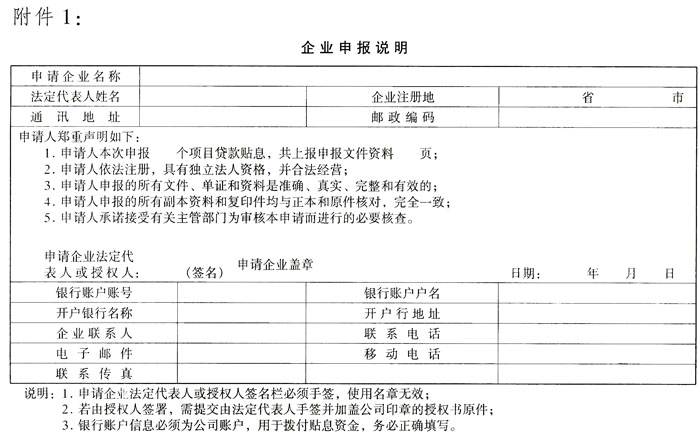
  2 "Enterprise Declaration Notes" (Annex 1);
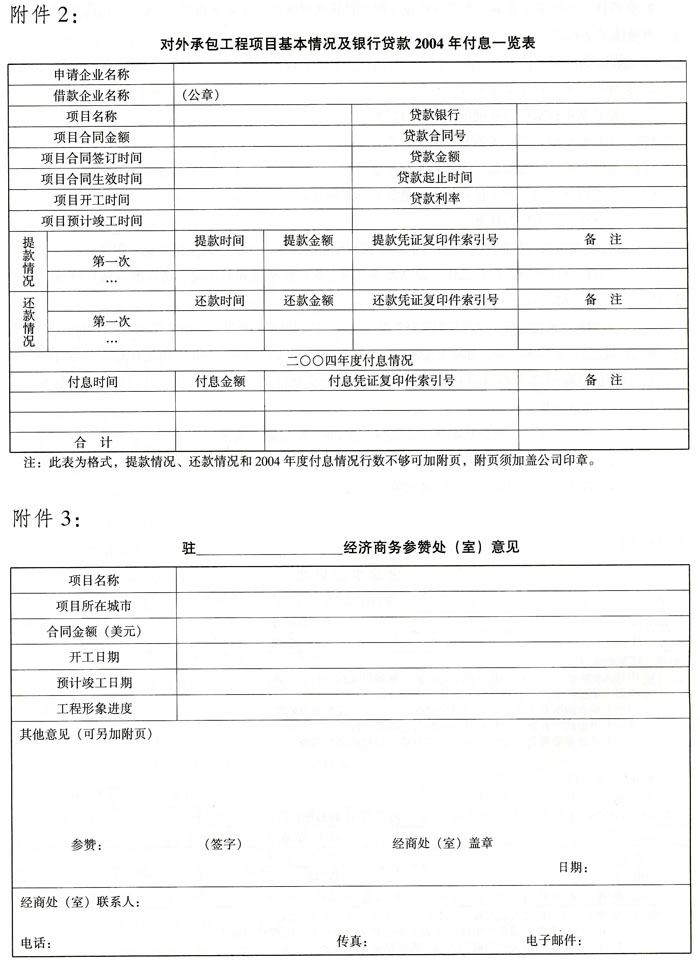
  3. Basic Information of Foreign Contracted Projects and List of Interest Payment of Bank Loans in 2004 (Annex 2);
  4. Copy of the business license of the enterprise as a legal person;
  5. A copy of the commercial part of the project contract (Chinese version or Chinese translation);
  6. Written opinions of overseas economic and commercial institutions on the implementation of the project, including: contract amount, commencement date, image progress, estimated completion date, etc.;
  7. A copy of the bank loan contract;
  8. A copy of the settlement voucher for bank loans, interest payment and loan repayment.
  (2) application procedures:
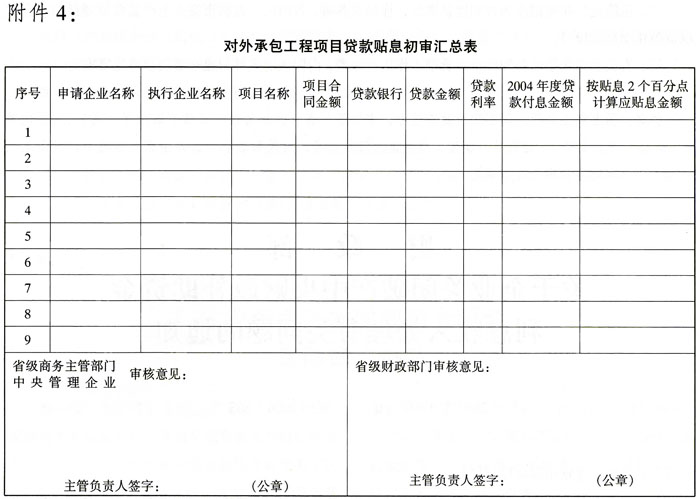
  1. Local enterprises will submit the above materials to the local provincial finance and commerce authorities before February 28, 2005, and the provincial finance and commerce authorities will conduct a preliminary examination of the projects applying for interest discount according to the provisions of this notice, fill in the Summary of Preliminary Examination of Loan Interest Discount for Foreign Contracted Projects (Annex 4), and jointly report to the Ministry of Finance and the Ministry of Commerce before March 31, 2005;
  2. Enterprises managed by the central government will submit the Summary of Preliminary Examination of Loan Discount for Foreign Contracted Projects (Annex 4) together with relevant application materials to the Ministry of Finance and the Ministry of Commerce respectively before March 31, 2005;
  3. The Ministry of Finance and the Ministry of Commerce entrust intermediaries to jointly issue discount funds after reviewing the declared projects;
  4. Within 15 days after the two ministries issued the notice of financial discount funds for foreign contracted project loans of relevant enterprises this year, the Ministry of Commerce will directly allocate the discount funds to the enterprises.
  Third, the discount standard
  (a) the annual discount rate is not higher than 2 percentage points;
  (2) The discount period is calculated according to the calendar month of the actual loan period;
  (3) The project enjoys discount interest for a maximum of 3 years;
  (four) interest rate hikes, penalty interest, etc. other than normal loans are not subsidized;
  (five) each foreign contracted project can only enjoy a loan discount;
  (6) The discount amount shall be calculated in RMB.
  Four, foreign business institutions shall issue written opinions for enterprises in accordance with the requirements of item 6 of the first paragraph of Article 2 of this notice (Annex 3).
  Five, in order to do a good job in financial discount in 2004, improve efficiency, please enterprises in accordance with the provisions of this notice, carefully prepare the discount application materials and bind them in order, according to the project directory.
  Six, after receiving the discount interest funds, the enterprise will make a reduction of the financial expenses of the current year. No unit may cheat or intercept discount interest funds in any form or for any reason. In violation of the provisions, the Ministry of Finance and the Ministry of Commerce will fully recover the discount funds and cancel their discount eligibility. At the same time, investigate the responsibility of the relevant personnel.
  Seven, the financial and commercial departments will supervise and inspect the implementation of discount interest funds, to ensure that discount interest funds in place in time, earmarking.
  Attachment: 1. Description of enterprise declaration
     2. Basic information of foreign contracted projects and interest payment list of bank loans in 2004.
     3 in _ _ _ _ _ Economic and Commercial Counsellor’s Office (room) opinion
     4. Summary table of preliminary examination of loan discount for foreign contracted projects