
This abstract is selected from The War of War (1618-1648): National Construction and the Pursuit of Peace in Europe. Author: [Germany] Johannes Buckhardt, translator: Ma Yi, proofreader: Meng Zhongjie, published by Zhejiang People’s Publishing House in December 2020.
–
Herodotus is regarded as a pioneer of European historiography. He recorded history so that the glorious past would not be forgotten and kept alive. But history is almost only made up of wars and war heroes, and this situation lasted until not long ago. No wonder the new generation of "non-heroes" are more willing to turn to other themes. Thucydides, Herodotus’ successor, has questioned the cause and reason of the war in his History of the Peloponnesian War, which has been going on for 27 years and nearly 30 years. Then, from this point of view,A new historical study of peace has refocused on the wars in Europe, but the purpose now is to help people avoid wars by studying the causes of wars.This is an important step to bring a whole set of brand-new views to war and peace, and also to bring a bearing overall result to the particularly unsettled early modern times. It was an era of new trends,People’s starting point is no longer the war that must be eradicated, but the peace that needs to be established urgently.From this perspective, people throw the problem of political practice to history, which is:Is this "der Friede aller Frieden" ready with ideas, methods or means to help people end the contemporary wars and conflicts that have reached a dead end?Historians don’t need to separate the Peace Treaty of Westphalia from its war background too much, but with the renewal of emphasis, the whole history of the thirty years’ war has taken on a different look, which is shocking.
This book on "War of War" puts peace at the center of all discussions. This book does not waste time in giving birth to the pre-history of war, finding the causes of war and disputes, and keeps restraint on the history of war and battle. However, it did not rashly analyze the Peace Treaty of Westphalia as a comparative background for conflict resolution. On the contrary,This brand-new and somewhat ingenious history is derived from the huge peace demand of this war disaster, and traces the peace attempts and opportunities in the war process from the beginning.
War of War (1618-1648): European nation-building and the pursuit of peace.
Author: [Germany] Johannes Buckhardt
Translator: Ma Yi, proofreader: Meng Zhongjie
Zhejiang People’s Publishing House was published in December 2020.
In the introduction, this book tells how to measure the horror of war and its impact in the case of huge space-time span and nearly half of Germany’s population loss, and thusAsk a question: Is there really no one who can stop this?Famine, plague and war violence constitute the triangle of death, and chroniclers regard it as a threat to the survival of the whole culture, but when they look to the future, they question whether there will be a future. The war at the top of the death triangle is violent and has serious consequences, which makes the above problems more urgent. Finally, in the face of the terrible fate of children, the cherished chastity of women and the death of soldiers without any patriotic or religious significance, this bookAnother question is raised: how can a highly developed culture tolerate such an invasion that attacks the whole ethnic group and violates its own cultural norms and values?On this issue, all theological sects failed at that time, and they blamed the war on God’s punishment for everything, instead of thinking that it was the masterpiece of the devil who needed to fight it, as was common at that time. It was not until the end that the church advised those in power to follow the Christian creed of peace.In addition, before the whole Central European civilization was about to collapse due to war, was there really no intervention?
In fact, people have made plans, sought opportunities and acted from the beginning, which is shocking.If people are committed to preventing war politically, it seems that there is a possibility of peace, but they still miss the opportunity. The cause of peace runs through the whole war, and this book makes a close inspection of the most promising sites on the road to peace in Westphalia. It is worth remembering that the eger Peace Treaty, which was almost successful in 1619, will surely nip the German war in the bud if it succeeds (Chapter 1); It is also worth remembering the Lubeck Peace Treaty in 1629, which gave the empire an interval of war and could easily end the war completely (Chapter III). Perhaps, it is also worth remembering the great Prague Peace Treaty in 1635, which was promoted by wallenstein who converted to peace and based on a more comprehensive view of Europe. The purpose was to rescue Germany from the ill-fated war crisis, thus advancing the Peace Treaty of Westphalia by 10 years (Chapters 5 and 6). However, these opportunities and other actions failed to stop or end the war, but they did not become worthless, but they had important experimental value-some were "trial and error" according to the experimental rules, while others became the cornerstone of ultimate peace. Finally, people select the observations and reflections along the way, compile them systematically, and ask whether they have the potential of peace history.Some of these contents are only essential to ending the war at that time, and many of them have merged into the development track of war and peace and international law, while some peace knowledge may be beneficial to solving our contemporary conflicts and all wars.
–
| Peace Activists and Time Window
"Men make history", the phrase of Heinrich von Treitschke (1834-1896), a radical Prussian historian in the 19th century, was once familiar. However, this sentence has long been quoted by no one, and it is no longer a positive judgment. The reason is easy to understand. For example, it is absurd that three truly powerful female rulers in history, namely Queen Elizabeth I of England, Queen Maria Tracy of Vienna and Russian czar Catherine II, dominated the early modern times. In addition, there are many women figures of the hour, such as Amalie Elisabeth (1602-1651), the countess of Hesse who was politically opinionated around 1648. Regardless of gender, it is precisely certain social groups, social structures and political processes that have created history, not individuals. But sometimes, it is people who push history. The Thirty Years’ War is full of such figures, and this book must also take this into account.Because, obviously, who holds power in crises and conflicts is crucial from ancient times to the present.On the controversial issue of whether war can be avoided, the individual level plays a key role in reconstruction. The influential Gates Coffler, three peace activists of the Viennese imperial court, died one year before the "throwing out the window" incident. Khlesl, the chief consultant, was overthrown by a coup a few weeks after the incident, and the eger negotiations, which were only one step away from the beginning, were finally destroyed by the death of Emperor Matthias. Two groups of people took over the political power, one was the militant Ferdinand II and his followers, and the other was the radical group around the "Winter King" Friedrich V. Then there were more deaths and garrison changes, and the time window for peace talks was closed.It is almost conceivable that the Thirty Years’ War might not have started at all without these unfortunate incidents on a personal level. For negotiation, the importance of personal situation and lucky opportunity cannot be underestimated.
Coincidentally, another person who died at an inappropriate time was wallenstein, who had turned into a peace activist.The Viennese court had two demands: first, to nationalize wallenstein’s army by eliminating the army commander (Chapter III); Secondly, peace was reached with Saxony through the same person, namely the designated negotiator wallenstein. In fact, the two are mutually exclusive, but as mentioned in chapter 5, the two things are incredibly parallel. The murder mission was completed a few days early, so the peace suffered. Is this failure, misfortune and fallacy? At this point, the media in central Germany tried to turn disadvantages into advantages-the next year, the emperor signed a peace treaty with Saxony, and the media reported it as the legacy left by the dead peacemaker.
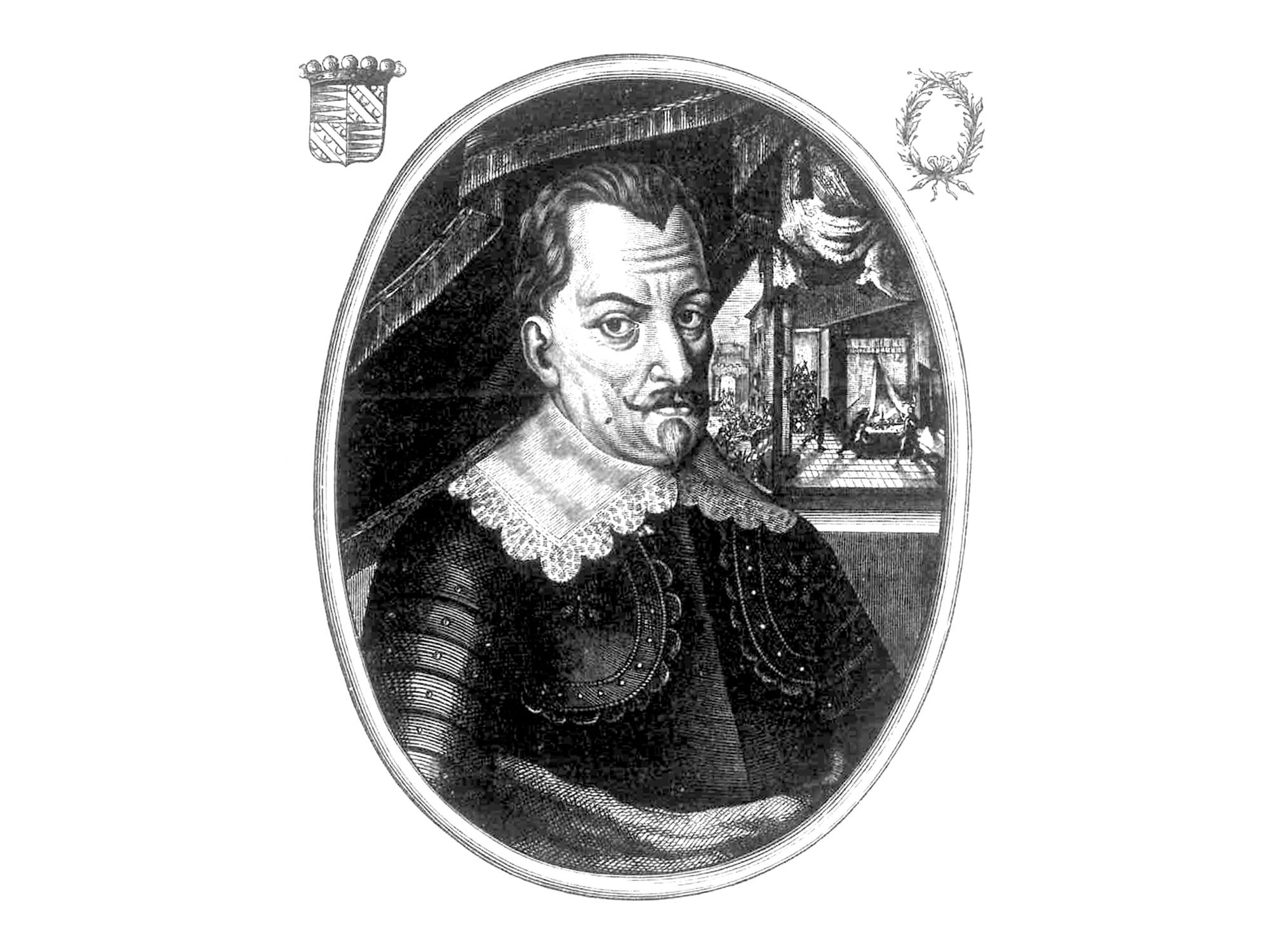
Portrait of wallenstein (illustrated in the book)
However, on the other hand, there are also opportunities to create opportunities and promote peace at the individual level. For example, Johann Georg, the elector of Saxony, always loved the empire, was moderate in sectarian politics, and devoted himself to reaching understanding and peace. During the whole war, he ruled the most powerful and influential elector country at that time, and he was actively supported by Caspar of Schoenfeld and other aides for a long time. Also, during the Westphalia peace talks, Dr. Johannes Leuber, an authoritative member of the Saxon Mission, was the inventor of the main conflict mediator-"Normal Year" in 1624. In addition, there is a unique relationship between wallenstein and Commander-in-Chief Anim, who worked in Saxony: a pair of enemies who have made good friends with each other have become negotiating partners, and if wallenstein can survive, they will surely achieve peace successfully.
To tell the truth, some heroes in troubled times died at just the right time to avoid causing more damage, thus bringing a glimmer of life to peace.For France, this applies to Emperor Henry IV, who was honored in the history books for ending the religious war in France, and was well-deserved and impressive. However, about 10 years before the Thirty Years’ War, he wanted to use a regional conflict to restart the struggle with the Habsburg dynasty as a universal power. However, Henry IV happened to be killed by assassination, which was a great blessing for German peace. In the war, gustav adolf died outside Lu Cen’s intention, taking the dual-ideology Gothic Protestant war instigator away from the stage of the war theater. This opened another option for the Swedish peace faction and the hesitant Oxens Cerna-however, this option was cut off by the powerful Swedish generals and the French’s attractive alliance proposal.
Things that can’t be controlled at personal level or time come together, forming a favorable or unfavorable coincidence and producing a balanced result, which can help people to understand to some extent why all kinds of peaceful efforts to stop the war have been wasted, but can’t give a general explanation. To answer this question, people need to consider it from a completely different level.
–
Misunderstanding of the conflict of interest in order politics
Saxon’s negotiation policy shows that they have clearly realized that the Bohemian uprising did not really involve religious issues, but was a political conflict. The original intention of resisting any religious war made the Protestant mediator take a neutral political stance between the Catholic court in Vienna and the Protestant Bohemian hierarchy (Chapter 1). Although Johann Georg I, the ruler of Saxony, adopted this correct interpretation mode from a political point of view, he still regarded it as a political rebellion, which needed to be resolved as peacefully as possible. But what he didn’t see was that the Bohemian uprising, like the parallel Nederland uprising, was aimed at establishing a country. Only by recognizing the real goal of Bohemian Uprising can we achieve sustainable compromise and peace, thus contributing to the establishment of so-called small countries, such as giving small countries more autonomy under the Habsburg emperor selection system (Chapter II).
The real purpose of war is often not publicly expressed at the beginning, but hidden in the preparation stage and surrounding of the conflict, or coded by symbols.Of course, the real purpose of war should be recorded and become a prerequisite for sustainable peace. In this "war of war", a factor related to the choice of Europe’s direction has increased the cognitive difficulty, and this choice can only be fully recognized when reviewing history in the basic historical dimension, namelyThe unresolved issue in this war is whether the nation-building in Europe will take the road of universalism or establish an independent sovereign state.From the small scale of Germany, there is a compromise road, that is, the two options are embedded in the same political system, and the state level and the national level are set separately. This war defended this federal system, and the Peace Treaty of Westphalia also guaranteed it. In Europe, the treaty is committed to establishing a collective security system, but it is difficult to put it into practice. Europe began to hope for the establishment of an independent sovereign state.
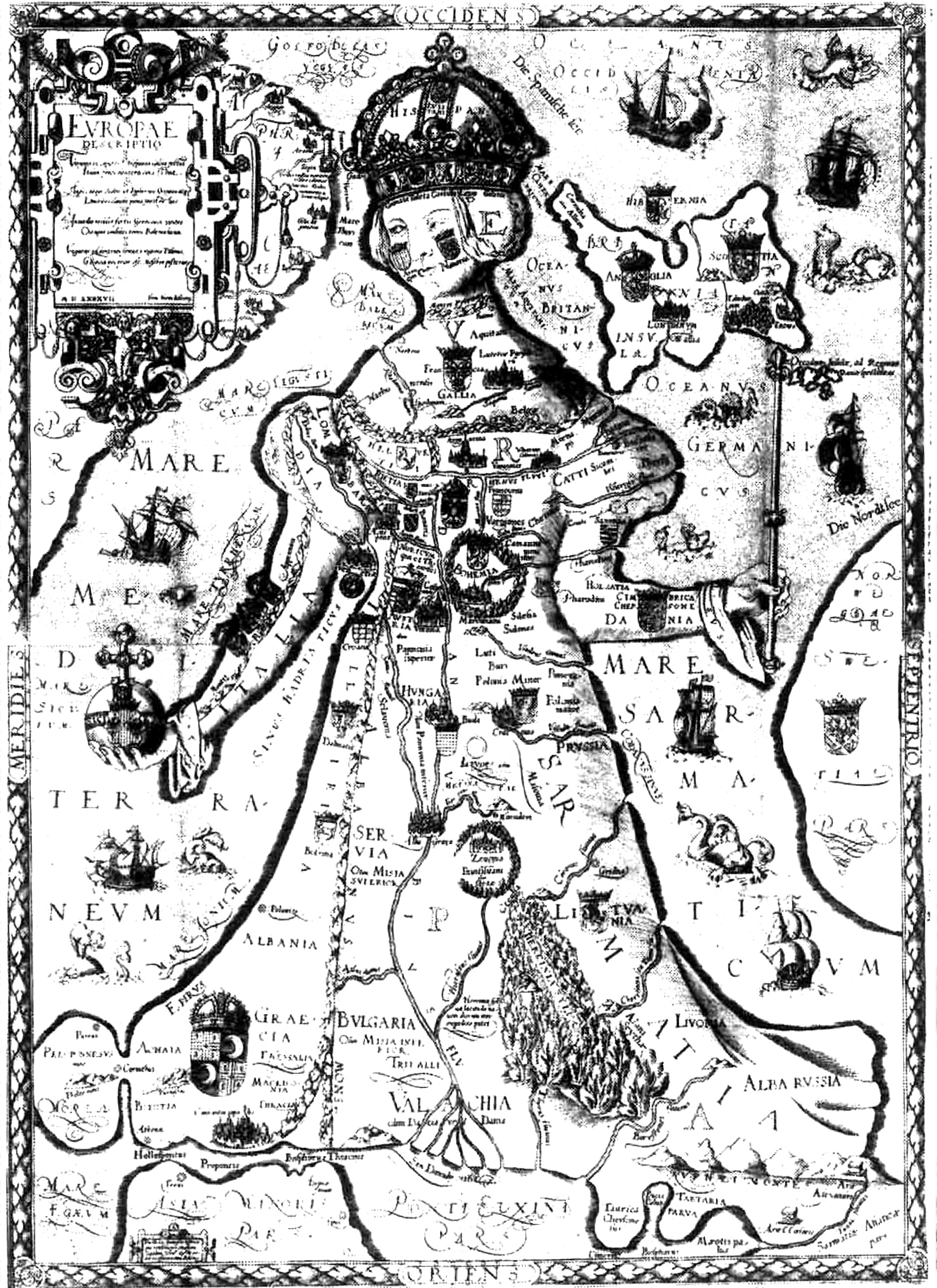
The Queen’s Map of Europe around 1600. At that time, Europe was still regarded as a former country with no borders and only sporadic regional descriptions. However, in the era of Habsburg’s universalism, Spain has always been wearing a crowned head, while Bohemia, as the capital, is the center of the body, both of which are in the most prominent position. (Illustrated in the book)
The peace treaty will determine a completely different basic road between Germany and other European countries. Before the final treaty is announced and all the dust settles, all the separate peace treaties are only the preliminary results without deadline guarantee.Only by acknowledging the greatness of this final order political achievement can we understand why people can tolerate this war that drives the whole culture to the brink of destruction.
Because a coordinated European order cannot be solved by a separate peace treaty, but it needs to mobilize all forces. Directional choice needs a grand meeting, but countless individual problems don’t. The reason is that only at the peace conference, parallel and mutually coordinated bilateral treaties, namely the treaties concluded by the former universalist emperor, the king of France and Sweden, the independent Netherlands and several major countries mentioned in the treaty, can the international system of Europe be established, also known as the "Westphalia system".
However, before all this happened, the Peace Conference took two years to start, and the meeting lasted for four years. At the same time, the war did not cease fire, but continued without restrictions.In this process, the murderous battle went to the end, as if everyone wanted to win Germany, a universal power, making the latter even more desolate. If people take this into account, then the highly praised peace model "The Peace Treaty of Westphalia" is only good at its result, not its protracted implementation process. Both the Lubeck Peace Treaty and the relatively bumpy Prague Peace Treaty were signed in a few weeks.The Peace Treaty of Westphalia, even if it involves a broader dimension, cannot explain why the negotiations have been delayed for nearly five years, but it shows that some participants lack the will for peace.You may also see a deceleration trap here. If there is no cease-fire, but a demilitarized zone is opened for negotiators in Westphalia, and good care is given to completely remove the suffering of war from the negotiators’ field of vision-this will not promote the smooth progress of the result-oriented work. In the safe zone, people prefer to explore for a long time rather than negotiate seriously, until the arrival of the talented emperor’s special envoy, Count Trauttmansdorff. He knew what the situation of the emperor and the empire was, and submitted the draft treaty for the first time after careful consultation. The draft was not far from the final result, but it was rejected at once, and Count Trauttmansdorff was disheartened and set off again. Therefore, Sigrid Westphal (1963-) put forward the concept of "admission", that is, the word "entry" used in this book, which emphasized that people were forced to allow the representatives of the truly affected places to join the peace talks, and solved the outstanding problems bit by bit through the inter-sectarian "third party"-this was the decisive factor for the successful conclusion of the Peace Treaty of Westphalia. For example, at an affiliated conference held in Nuremberg, the imperial hierarchy allocated 5 million imperial talers to Sweden as agreed compensation, thus liberating Germany from the occupation of foreign troops. This is a great achievement of European unity, although few people mention it now.
This book highlights the institutions of double significance to peace, which is of great significance to the empire (Chapter VI). On the one hand, various institutions continue to operate unswervingly, creating a handrail for people to support in a fragmented world, so that people can survive; On the other hand, the institution itself became a positive element of peace, urging peace in a surprising way (Chapter VII) and bringing the German empire into an orderly post-war situation. In addition, there are some institutions completely different from imperial hierarchy, imperial regions and imperial courts. Perhaps the partially nationalized "standing army" can be counted. Unlike the loose semi-private forces, they are organized contacts and constitute the survival chips of the political power negotiations.What people should not forget in particular is the highly organized Imperial Post, which has a website and timetable. Due to the high demand for information in the war, it even experienced a rapid development as the only information institution.In this war, the imperial federal system persisted and stood the test, survived all malicious slanders during the information blocking period, and finally ran smoothly. As an alternative to the establishment of a single sovereign state in Europe, Germany’s federal system is not overestimated at all. An international working group led by British scientist Brendan Simms (1967-) even suggested that the federal model in the Treaty of Westphalia should be used as a solution to the current Middle East conflict-even though it was inadvertently understood as a European model, although it was only realized in the German Empire.
–
| Peace Language and Peace Practice
In fact, this "war of war" not only involves the new national order in Europe, but also guarantees different forms of order in Germany.This has not changed the significance of pursuing peace, which has long been too narrowly defined. If this choice is not great enough to determine the political direction of Europe in the next few hundred years, then a series of peaceful roads, practices and tricks will certainly succeed.These methods of promoting peace are always memorable. Some of them entered the Peace Treaty of Westphalia, others became diplomatic means or entered international law.It is worth mentioning that people can still find the shadow of the above methods in negotiation practice and peace policy tools, while other methods may become diplomatic skills through the hands of political advisers who are familiar with history. This book has selected a small number of pioneering works that opened up in this war and affected peace, and disclosed them. The following will focus on their peace potential and list them one by one.
Among them, the most basic is the language of peace accompanied by political activities.From the research results of the first batch of diplomatic letters after the "throwing out of the window" incident, people can realize that the two sides implemented appeasement strategy by minimizing confrontation and maximizing all commonalities and achievements.In addition to the old strategies such as protecting the so-called partners with blocked information, Saxon mediators also hope to exaggerate the willingness to cooperate and negotiate, and enlarge what has been negotiated. In the preparatory stage of the eger peace talks, the leader of the Protestant League in Pfalcz made an unexpected visit. When reporting the news to the commander-in-chief of the Catholic League in Munich, the language of peace, which is conducive to peace, stood out and is still respected today.The imperial language of peace rose in the 16th century, was maintained by the offices and diplomats throughout the war, and was re-accepted soon after the war.It is mainly used in the concept of integration related to domestic peace. These emotional goal concepts revolve around the maintenance of the imperial constitution, the restoration of "old German trust" and the harmony among imperial members. The significance of this integrated language lies in eliminating the influence of religious interference factors on imperial peace. The language can be accepted by both Protestants and Catholics, but its purpose is by no means to exclude the other party from the imperial association, but on the contrary, it is to emphasize its original belonging and loyalty to the empire when both sides have special interests of their sects.
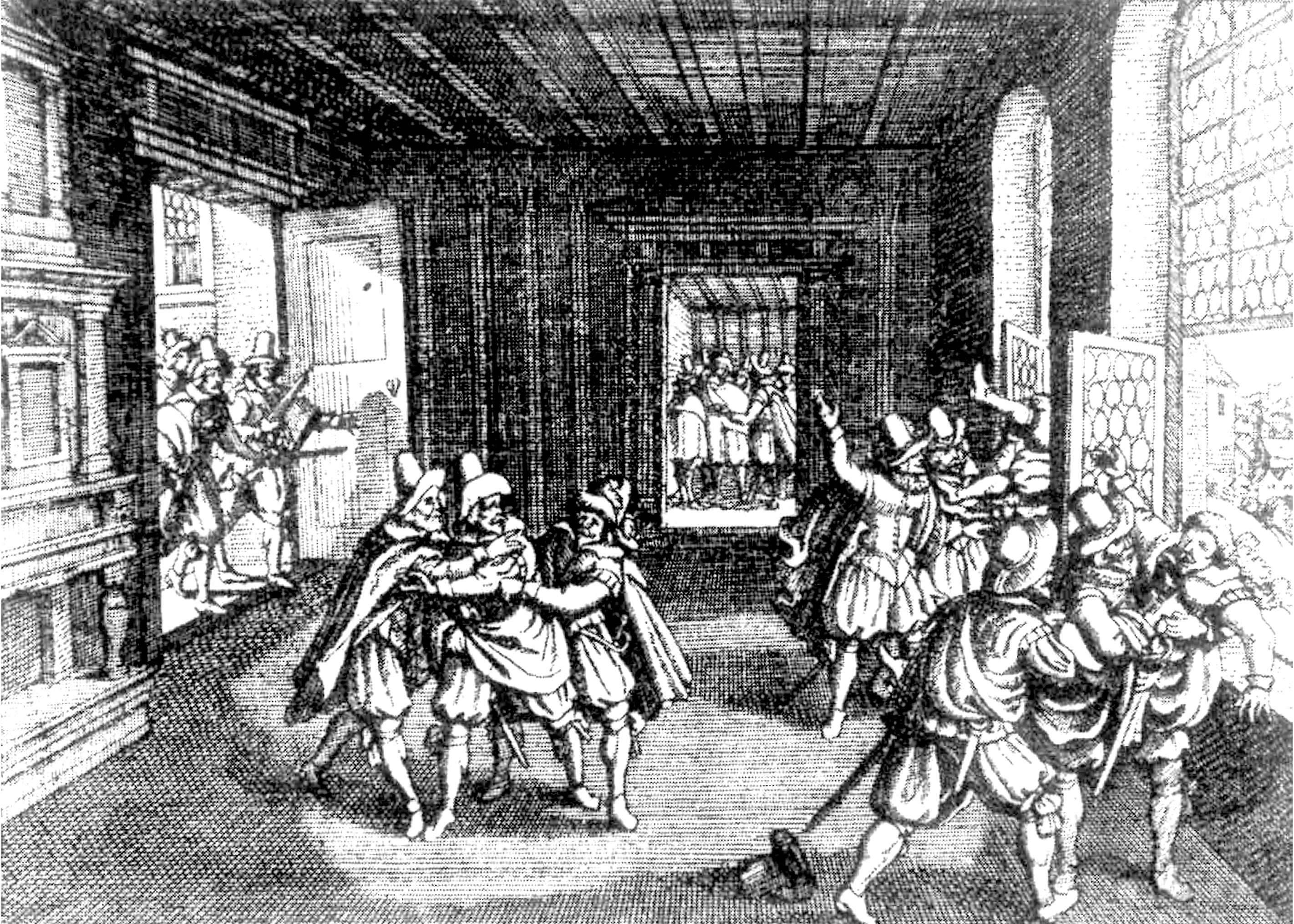
On May 23rd, 1618, "Prague was thrown out of the window" (illustrated in the book).
In the Prague Peace Treaty, this kind of integrated rhetoric added a bit of political color (Chapter VI). On the one hand, the language of the peace treaty balances the dual state system of the empire at the constitutional and legal level, that is, it reaches a balance between respecting the rhetoric of the imperial head of state and emphasizing the hierarchical freedom of the empire; On the other hand, forced by the situation, the liberation plan with national patriotism was put forward, but the military threat of war or ultimatum was avoided, as was common in the declaration of war at that time. The original text of the Treaty of Westphalia was Latin, which was formally concluded by several European sovereign countries and their German "allies". Although the treaty mainly stipulated Germany, it hardly provided space for the imperial peace language full of national consciousness.
However, the Peace Treaty of 1648 further developed the form of peace between countries for centuries. After the bloodshed, God influenced the ruler’s heart and turned it to peace-attributing such a peace proposal to God can avoid all earthly questions, such as how to slide into war step by step and who needs to end it more urgently. In this war, the rulers of warring parties and their successors with all titles span the narrative of two generations, giving peace beyond personal effectiveness.
Three core clauses that have appeared almost all the time since then deserve special attention: one is "Ewigkeitsklausel", that is, "Pax perpetua" in the Peace Treaty of Westphalia.It distinguishes the indefinite peace from the temporarily agreed ceasefire. For example, the ceasefire between the Netherlands and Spain resumed in 1621, 12 years later, and its combatants also fanned the flames of the Thirty Years’ War. Several ceasefire talks led by wallenstein were limited to a few weeks.However, the peace in Westphalia seems to be far from "permanent", as it is often ridiculed, because it is often only a few years before the next war starts again and then ends "permanently", and so on.However, the significance of the "permanent" proposition that has not been fulfilled in practice lies in that it marks peace rather than war as a normal state of human beings worth pursuing. The standard meaning of "permanent clause" also includes its contribution to international law. Almost all subsequent peace treaties explicitly trace back to and cite the Peace Treaty of Westphalia, declaring its validity or trying to restore it. But what does it mean if the content of the future peace treaty redraws the European territory again and again? For example, after Louis XIV restored the universal monarchy, he launched the "Second Thirty Years’ War", which lasted intermittently from 1667 to 1697. Obviously, the Westphalia system, that is, the multinational order itself, was guaranteed with the help of the Friedensvertrag von Ryswik and withstood all wars in early modern times.
The second is "Restitutionsklausel", which stipulates that it is a basic principle to restore the pre-war situation, and its specific implementation and restrictions are regulated by the contents of the treaty.Except for the stipulated "normal year" of 1624, which was the exception of restoring religious status, people regarded 1618 as the standard measure, which laid the foundation for the return of occupied territories and the re-appointment of amnestied governors of Pfalcz and mecklenburg. Therefore, the redistribution of all important territories seems to only correct the deviation from the beautiful and peaceful old times. This is also a peaceful expression that is easy to use and accept.
The third clause is sometimes called "pardon clause", but more precisely, it should be called "Oblivionsklausel" according to the concept of treaty.It stipulates the mutual obligation of all people, that is, everything that happened to each other in the war is deeply buried in permanent forgiveness and forgetting. It is actually an anti-war crime clause, which was more or less clearly observed before the signing of the Treaty of Versailles in 1919. The reason why the Treaty of Versailles demanded compensation from Germany was Germany’s war crimes, while the money and land paid to Sweden in 1648 were regarded as reimbursement of war expenses, thus repaying the Swedes’ "help" to the empire. Because of the "forgetting clause", all legal procedures related to war are excluded, and even the prosecution of war criminals is not enough. On the other hand, abandoning all discussions about war crimes will certainly help to stimulate the peaceful will of all parties.
Since 1648, various modern peace treaties have made more and more high-spirited words of peace and friendship appear among the contracting partners.The "securitas" of the contracting parties actually refers to guarding against each other. Not long ago, the study found that this meaning first appeared in the augsburg Religious Peace Treaty, which was used to describe peaceful purposes in 1648, and is now also used among European sovereign countries. In the 17th and 18th centuries, "security" was more and more regarded as the reason why the empire and Europe took defensive measures to ensure peace. Today, this concept still exists, such as "security policy".
People use time to make a skillful move and create a peaceful opportunity for themselves. "Return" skips the war years, "Forgetting" deletes the past of the war, and "Permanent Clause" wants to extend the state of peace into the future forever.The "normal year" stipulates not the present state, but a coordinated standard year in the past. The Prague Peace Treaty stipulates that it is 1627, and the Westphalia Peace Treaty changes it to 1624, that is, between the interest factions demanding 1618 or 1629, a middle value that can make both sides reach a consensus is taken as a compromise year. Except for some disturbing factors that need to be cleared up, it is precisely this numerical construction that has become the most successful means to maintain religious and political peace.
A particularly ingenious peace trick blocked the revision of the treaty by time limit, thus delaying the final resolution.Generally speaking, imperial institutions, especially the Supreme Court and the Permanent Imperial Council, like to shelve conflicts that undermine peace until difficult situations disappear by themselves, such as the death of an opponent or the end of the war that the emperor asked for support. The augsburg Peace Treaty demands fundamentalist theologians to accept the political and legal equality of the two sects, and stipulates it as a temporary plan before religious reunification to reduce its negative influence. However, the anti-amendment regulations claim that until then, the plan must remain unchanged. It really survived the whole Thirty Years’ War, and was clearly confirmed in the Peace Treaty of Westphalia with necessary revisions and "changes". If these peace treaties are still valid, then this always applies.Today, the status of sects in German politics and law can still be traced back to this peaceful trick, which may also help fundamentalists of other religions get rid of obstacles to peace.In the Prague Peace Treaty, people used the same delaying method to abolish the Imperial Decree of Return in 1629. The Order of Restitution did not endanger religious peace, but people said it was easy to cause conflicts. In order to save the emperor, it was only exempted for 40 years and then asked for advice again. The Peace Treaty of Westphalia has not mentioned this stubble.
People who talk about separatism don’t want people to think of an integrated peace plan, which is often the case.The separation of basic rights between the two levels of government has become the symbol of imperial federalism, and it has gained new balance and guarantee in the peace treaty since Prague Peace Treaty. It is on this basis that cooperation far beyond war has been successful. As far as a single separation mode is concerned, the controversial issue of territorial cession in the Peace Treaty of Westphalia has also been solved happily-Count Pfalcz regained Pfalcz in Rhine, while the Bavarian elector kept Upper Pfalcz. For example, in the empire, the division of dynasties prevented Saxony from inheriting the war, while in Europe, the large-scale inheritance division later ended the Spanish succession war. This improved form made the semi-ceded area enjoy a dual position in the national law, which was a very practical peace promotion measure. However, in the long run, it suffered an amazing failure in Alsace and its practice in the northern part of the empire was passable, but it was later abolished.
The biggest application field of the principle of separatism is in religion. Since the separation of sects, there have been many opposing religious sects in the religious field, of which two are politically controllable. It is these organizations that formed alliances and factions, and finally formed Protestant groups and Catholic groups, thus making these religious factions have the ability to negotiate and be incorporated into the Constitution. In 1648, under the concept of "convergence" and finally "equality", people established a balance of maintaining peace in imperial committees and towns where two sects were allowed to coexist, and through quantitative equality, quotas or procedural rules, they prevented the emergence of conflicting struggles in which one side overpowered the other. Another variant is the alternate system which can’t be divided. The boldest one is the absurd request to choose the bishop or ruler of Osnabrü ck alternately between Catholicism and Protestantism. Surprisingly, this demand was recognized, even though the Protestant bishop elected by a group of monks in the Catholic diocese was an infant. In general, this alternation system is indeed an effective means to resolve disputes for imperial posts or ceremonial privileges that are only allocated once. The premise is to trust the other party to adhere to the rotation system, and this trust is largely given by the legal security re-established in Germany in 1648.
Finally, the outstanding flexibility and creativity of peace seekers should be highly praised. It is found that the Saxon government is good at dealing with the world, and almost succeeded in stopping the war. We should also see wallenstein’s improvisation and private initiatives before the formal negotiations. Both of them are promoters of peace. In the Prague Peace Treaty, only by reaching an unusual and publicly recorded consensus on serious differences can we reach an agreement on the remaining points and sign the peace treaty. During the Peace Conference in 1648, only when the negotiation stage was reached and a binding resolution was reached could a peace treaty text be finally formed, which was no longer challenged by any party.It is more suitable to break through the seven-person limit of the emperor’s election as a symbol, that is, even the "sacred cow" can be slaughtered when the war is extremely critical.
-
| Construction site of European culture of peace
So, can this "war of war" give us some enlightenment on how to achieve peace?At first glance, it seems ridiculous to ask such a question on such a war that has not been reconciled for 30 years. It seems to be a counterexample of a war, from which people can learn more about what not to do. It is the duration and influence of this war and the never-ending peace attempt that makes it the largest peace construction site. People brought in building materials, prepared all kinds of building skills, and finally built a European architectural complex composed of multi-sovereign countries, guarding a dual federal state. However, even this "Peace Treaty of All Peace Treaties" only had a shell at the beginning. People celebrated the capping of their new houses with a series of peace celebrations, with hope and gratitude, among which the augsburg Peace Celebration, which is still being held today, is the most prominent. Within the empire, other institutional expansions are gradually improving, shaping the whole history of Germany in the future: there is an early constitutional emperor as the head of the empire, a parliament that continues to operate in the form of a permanent imperial conference for the first time, a new imperial judicial power to ensure peace and the rule of law (the top of which is the imperial royal court and the imperial supreme court respectively), and an imperial region that shares regional management and a stepped defense system with the countries. The "structural inviolability" brought by the imperial army and the federal organization form, which has now become the parliamentary army, has stabilized the empire for 150 years. This "structural inviolability" is constrained by the dual decision-making power militarily in a positive sense and by the hierarchical security system of federalism in a negative sense.The imperial system has interfered with the European national system, and some members of the empire also have dual status, among which the elector system of the Austrian royal family, which rose from hereditary territory, and the great elector who later tried or succeeded in forming a monarch country with other European powers, such as Bavaria, Saxony, Hanover and Brandenburg Prussia. In view of the above, the European war can also be brought back to "a peaceful empire in the sense of the Basic Law of Empires" (in Helmut Neuhaus’s language).
On the other hand, the Peace Treaty of Westphalia determines the development direction of a single sovereign state, and the "collective security system" is not exactly a goal-oriented research model, and the national construction in Europe has not yet been completed.However, the imperfection of national construction should be responsible for the "turmoil in early modern times".The reason is:First, although the coexistence of countries has been promoted to the level of norms, it is not stable enough.For example, Louis XIV’s new universalism retrogressed, and European countries used military violence to resist him together, and Prussian King Friedrich, who was good at war, broke into the national system and delayed the construction of the country;Second, there is still a deficit in the country’s institutional autonomy.The state power belongs to the ruler, but it allows a warlord to deploy a standing army, which is arbitrary and uncontrolled. However, if there is a little uncertainty, the replacement of kingship will lead to the outbreak of inheritance war. Different from the empire, the sectarian opposition in Europe is illegal, and the aggressive mercantilist new economic policy has swept through quickly, and secondary conflicts of interest are frequent, so the national rationality that has not yet been independent bears a heavier burden.Therefore, the recognized era of multinational system in Europe, which opened in 1648, just led to an early era of belligerence.
However, war-prone areas have to sign a large number of peace treaties, so the experience of this "war of war" and various attempts and partial solutions written into the Peace Treaty of Westphalia have been merged into the reservoir of peace experience.It is a "peace treaty", because looking back, it solved a war disaster, and looking back, it has also become a template for future European peace treaties. The preface of the model and the clauses that appear repeatedly and continue to play a role have proved this point. In addition, there are some principled contents.

Car of Peace in augsburg. In this print printed in augsburg, a driver is heading for the Peace Treaty of Westphalia. Driving is no longer a triumphant commander-in-chief, but peace in the image of a woman. The driver passed the pillar engraved with the core concept of the peace talks and crossed Mars mythology, the god of war with weapons. The coat of arms on the horse symbolizes the new European international system.
Apart from the war, the signing of the peace treaty is a huge media event. Its words and pictures not only determine the public perception on the German battlefield, but also leave a deep impression. As Heinz Duchhardt’s research pointed out, media events made the year of signing the peace treaty a "headline year" in Europe.Even in the printing industry, peace treaties spread with surprising density, and public influence continued to climb. By the anniversary of 1998, 42 different versions of the treaty text had been known, but more were yet to come-people soon found out that there were 74 versions. It is worth noting that a large part of the German version translated from the original Latin is not only used for academic and legal purposes, but also meets the actual political needs. The Vienna version of the emperor and the Mainz version of the archbishop gradually evolved into a semi-official version written in the official German language.Commentary articles and translations in other European languages followed one after another, thus establishing a well-informed public group supported by the publishing industry for the basic European peace treaty.Other European peace treaties also have their own necessity, but they can’t go beyond the criteria established in this peace treaty. According to this example, they concocted their own treaty texts, which were published and commented on for the second time, like milestones on the road of Europeans’ pursuit of permanent peace, and the necessary conditions for permanent peace were later defined by Kant.
In addition, these peace treaties have also been included in the early modern treaty collections, thus creating a treaty corpus for politicians, jurists and diplomats to use. Benjamin Durst, an expert, believes that the above practices greatly help to deduce the unformed international law, and it is convincing that the national system is regarded as a national system through repeated promoters. The peaceful generations have accumulated and continued the European peace discourse, excluded completely different and unsuccessful practices, and created a self-contained culture of peace. A number of research projects are devoted to this. These tasks include clarifying the undertakers of the culture of peace and their translation achievements, that is, creating the cross-language language of peace prevailing in Europe, and also accumulating the knowledge of peace in law and diplomacy, such as how to choose the negotiation place, how to phrase the treaty, and what kind of application and symbolic significance it has. becauseFor this reason, European diplomacy appears in the image of peaceful diplomacy, and peace works as a European norm, which is not taken for granted. As a last resort, the norm of peace also goes against the reality of modern Europe and has been viciously interrupted several times.
To measure whether political culture is applicable to peace from the perspective of the whole country’s law and diplomacy, we need to expand our vision to the whole cultural category, and the peaceful achievements achieved by the last art are by no means insignificant.Because in addition to social and political systems, music, painting and poetry took away this human disaster and prevented the collapse of human culture.During the Thirty Years’ War, the Italian music revolution had an important resonance in the field of church music with the image of Heinrich Schütz and a small musician. Spain and Flanders, which were ahead of Europe in this period, both reached the top of art, and were not affected by the war between the two countries at all. In addition to other current portraits of knights and battle scenes, Diego Velá zquez took the lead in achieving peace with his famous oil painting Die bergabe von Breda, while Gerald Tebaugh painted the peace talks between the Netherlands in Mü nster, while Joachim von Sandrart, 1606—1688), the first art historian, took the lead.In a word, despite the existence of war, the "normal" theme of daily life composed of religion, myth, portrait, interior painting, landscape painting and still life painting still dominates and maintains the continuity of culture.German visual art works are mainly copperplate prints, which accompany the whole war through records and comments. As the war lasted longer and longer, copperplate prints began to express their desire for peace. For example, the goddess of peace holding a symbol of abundance was placed opposite Mars mythology, the god of war holding a weapon, showing that the former was a better choice.
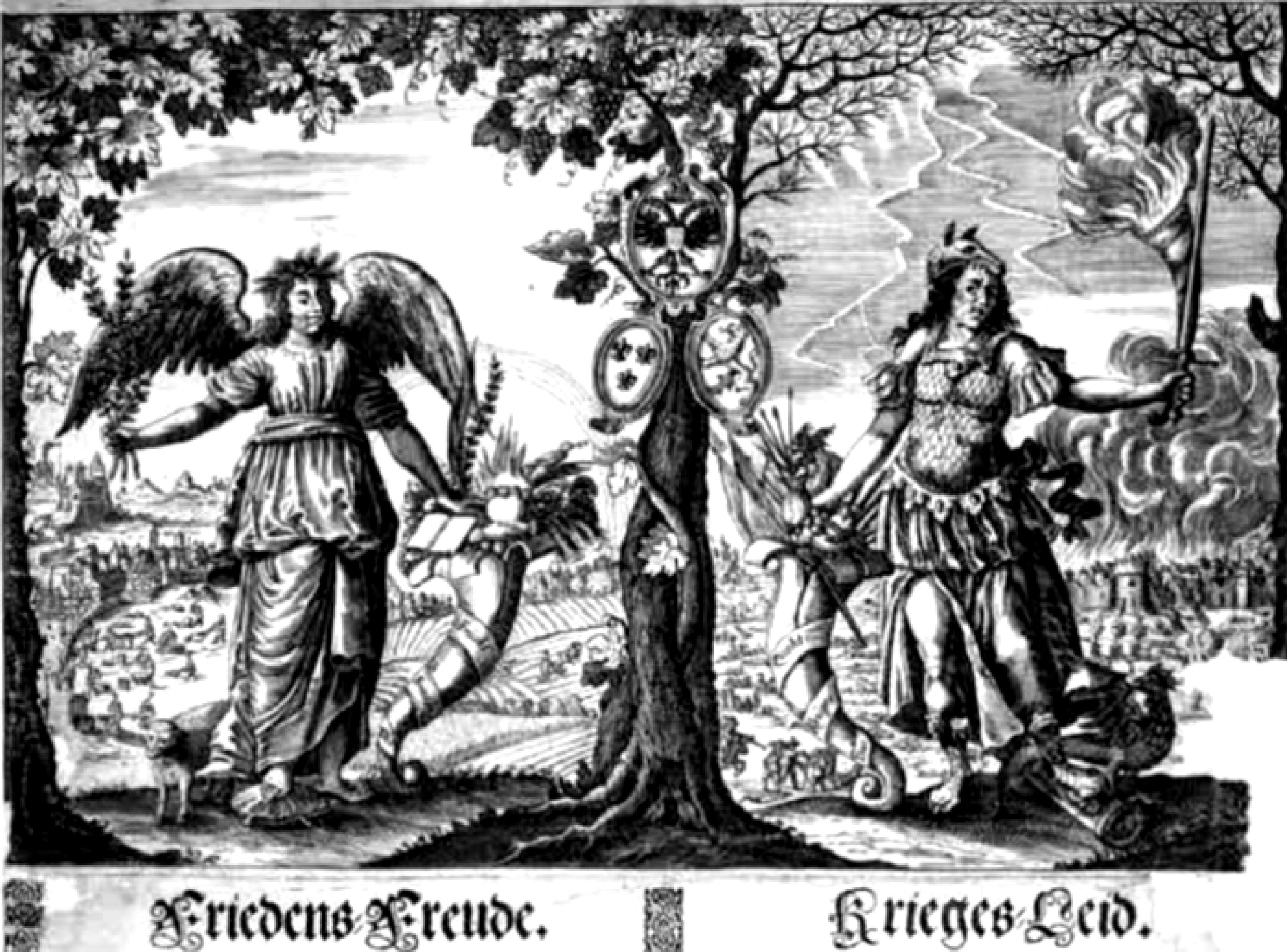
Peace = Happiness War = Pain, 1648.
Tree-shaped vines divide the two moral images on both sides. The background on the left is an orderly landscape. Under the winding vines, you can see a winged god of peace, holding the cornucopia in one hand and palm leaves in the other. Under the bare branches on the right, Mars mythology, the god of war, was holding a weapon bag and a torch, and the storm of war was overhead. This leaflet contrasts the two cultural states and thinks that peace is a better choice. The badges of the main signatories of the Treaty of Westphalia, such as the Holy Roman Empire, France and Sweden, are hung on the trunk, which guarantees this choice.
In the end, the poet complained about the disaster of German culture, but eliminated this crisis with exquisite art, which was the most impressive. At that time, the poet refreshed his language and poetics, and exhibited an independent style of the times, that is, the artistic peak in the history of German literature between Minne und Meistersang and Weimar Classicism-Baroque literature flourished incredibly in this war. Different from the late Baroque style of music and architecture, literature is at the forefront as a pioneer. Martin opitz’s poetic rules, the dominant virtue of Constantia, and the shepherd’s cheerfulness and joy in life are all romantic antidote for people to let go of war.The keynote of these works is always the desire for peace, until Germany, which is "cheering for peace", finally achieved its goal.
Another incomparable and unique peak is Gunter grass. In his short story Das Treffen in Telgte, he brought together many Baroque poets to discuss the tension between aesthetics and politics and call for peace together, thus expressing all the contents like a flowing stream. This is the only contemporary literary work that does not dwell on war events but insists on seeking peace-on another level, this is also the goal of this book. It would be very meaningful if the baroque poet himself became the subject of discussion. Since 1947, "Gruppe 47" has jointly shaped the development path of German postwar literature. People can read this work as a key short story about the gathering of "Gruppe 47". This may be the original intention of "Gathering in Telgert". However, it is not only a key novel, but also a game between the past and the present. It is exquisite in writing and wonderful to read. Except that the party itself is fictional, it is almost just a string of real names, poems and events in history. The organizer’s intention when calling the meeting was also: "In 1647, a party was held somewhere between Mü nster and Osnabrü ck. At that time, the war had gone through twenty-nine years and the peace talks were still inconclusive. At all costs, the purpose of this move is to give our only remaining link, that is, the mainstream German language, new value; It is also to participate in political discussions, even if it is a’ marginal person’ to discuss politics. "This passage reads like the poet’s "entry" into the Westphalia peace talks. They are meeting in Tergert, Gehrig, near the meeting place of the third-party emissaries, and both LunGehrig and Tergert are geographically located between the two peace cities.
Glass likes to talk about the role of food in life in his narrative. Through the theme of war, he has ample opportunities to observe and satirize.Suffering from famine, poets are content to drink soup, but when this situation may happen again, one of them thinks that people should not exaggerate.It is said that several art sponsors near the Munster Peace Conference sponsored a rich banquet for the poet’s gathering;However, when people were swept away, the peace poets were embarrassed to learn that this meal was actually robbed by one of them. It was Grimmelshausen, a young poet who was still actively fighting. He robbed the barbecue and wine from the Swedish car with bad atrocities.The work of calling for peace has to be interrupted again and again, because there are always untimely shouts in the kitchen-this is a typical experience of all conferences around the world. Are there many similar situations in Mü nster? On the one hand, if the real peace conference diplomats nearby are not taken good care of, they may come to a conclusion faster; On the other hand, wallenstein’s generous hospitality is really out of line with the diet of this era, but it has enhanced the opponent’s willingness to reach a peaceful compromise.In the long run, the recipes of the privileged class have laid the foundation for the formation of European tastes.The hotel in Telgert is run by Kurasher, the protagonist of Grimmelshausen’s novel, which is quite ironic. In the end, Glass set it on fire, and its brilliant story and its declaration turned into smoke and drifted away. But the narrator assured us that no one was hurt and everyone had returned home. As a matter of fact, real poets never leave their hometown, and they stay at home to write, and their works make Baroque literature stand out. The technique of fictional gathering highlights the significance of Baroque period, which is famous for maintaining German purity and peace policy.
Even the communication between poets in the novel is not fictitious, and people have organized five language associations (Sprachgesellschaft) during the war. One of the most famous is the "Harvest Society" founded by Fü rst Ludwig von Anhalttkthen in 1617. Because its emblem is palm trees, it is also called "Palmenorden". In 1644, the imperial city of Nuremberg established the "Flower Association on the banks of the Pelloni River" (Peggy Blumenorden). Followed by some associations established after the war, such as Elbschwanenorden.They have had a lasting impact far beyond the war.In addition to the state, churches and social institutions, cultural institutions have also made contributions. For example, the construction of federal educational infrastructure has reached its peak in universities in various States, and most of them have saved the war-torn German empire from falling into chaos and dying. So, will all this help other countries and prevent the worst from happening?
To what extent such a long European peaceful shaping is suitable for cross-cultural transfer is always a question worth thinking about.Even in the face of the highly developed culture of the Ottoman Empire, as well as its split country and completely heterogeneous culture, it should not be recommended hastily. It is true that two generations after the conclusion of the Treaty of Westphalia, the Ottomans signed the Treaty of Frieden von Karlowitz in 1699, and adopted the international law practice of European countries. However, the print media, which was very important for the whole European culture in early modern times and for nurturing the knowledge of peace, was not accepted until several centuries later. Therefore, unlike other parts of Europe, the print media could not play a role in the Ottoman Empire in early modern times, nor could it have a far-reaching impact. It is from this point of view that the peace culture of the 30-year-old peace construction site has not been formed and standardized, but it has been creatively planned, tried and integrated. In fact, it has become a more useful model for building other peace construction sites, including those outside Europe, and has gained enlightenment for promoting peace.
What is the revelation of promoting peace?It may be necessary for those who seek advice and those who give advice to find out for themselves.From the historical experience of Europe, the author hopes that the federal state model, the religious binding system under legal norms will bring political stability, cultural resistance and integrated peace language. For individual problems, some very creative compromises and solutions listed may provide some inspiration.In order to speed up the peace process, we need active peace actors and peace factions, such as imperial hierarchy, political commentators and poets who pursue peace. They are representatives of political interests and direct megaphones of local people suffering from war.In this way, this "war of war" finally came to an end.Perhaps, those who already know how to do this can achieve peace faster in similar situations.

关于作者