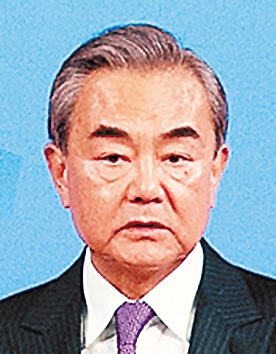
Wang Yi
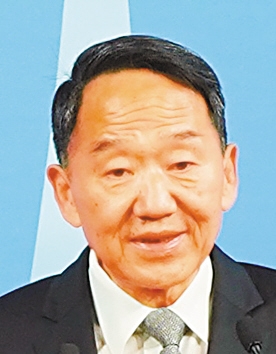
Jianguo Jiang
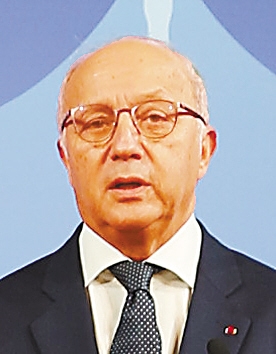
Laurent fabius (President of the French Constitutional Council)
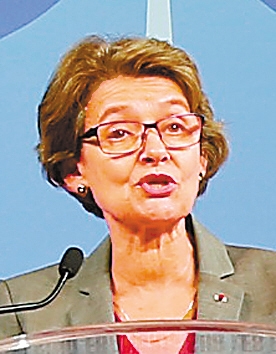
Irina Bokova
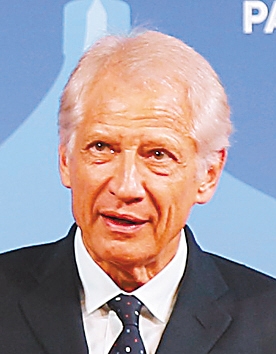
Dominique villepin (former French Prime Minister)
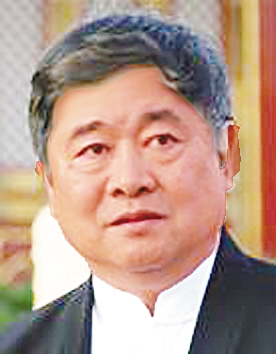
Dan Jixiang
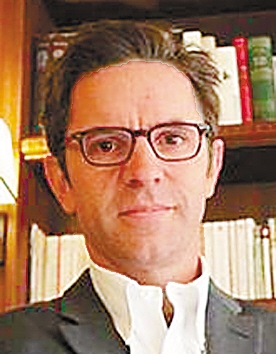
Justin Vais
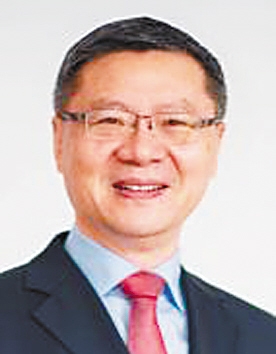
Weiwei Zhang
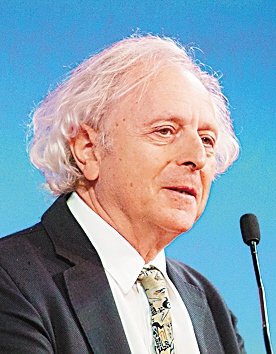
Dieu Benaim
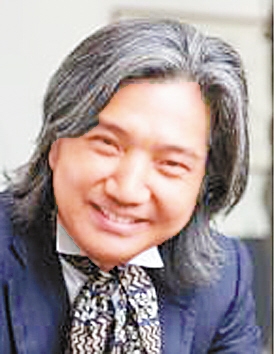
Wu Weishan
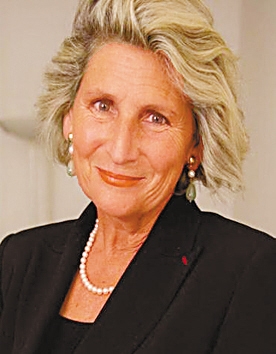
Chiala Colazza
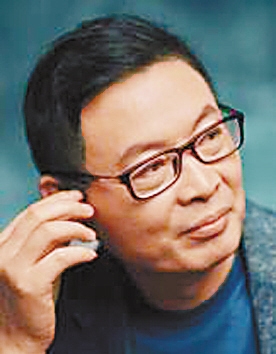
Maijia
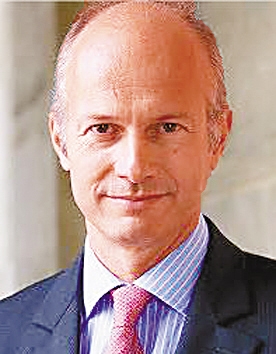
Hervé Barbale
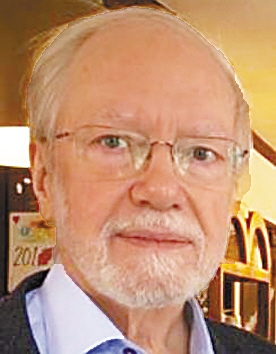
Shi nai
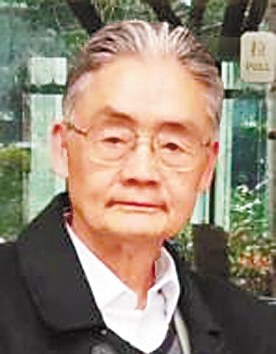
Luo guoxiang
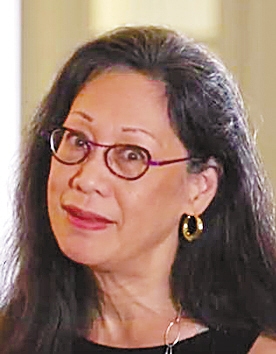
Deborah Frett

Liu Ye
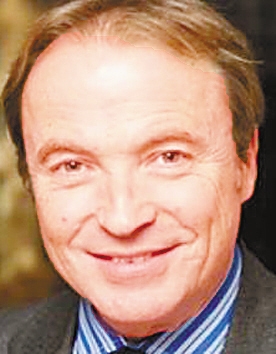
Jean Christopher Bass
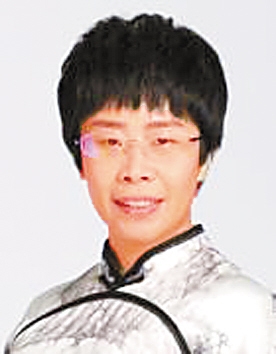
Meng Man
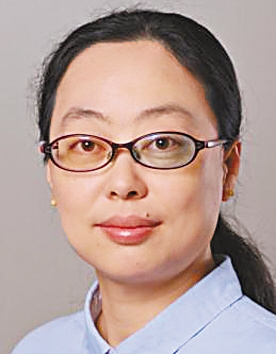
Zhao Xiaoxing
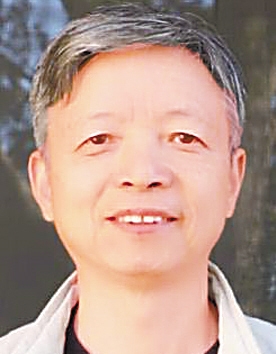
Shen Jian
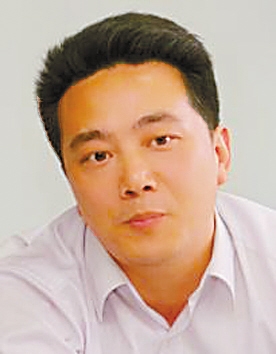
Liu Shaowen
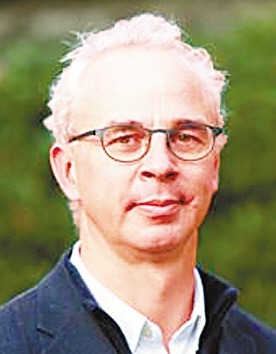
Emmanuel linko
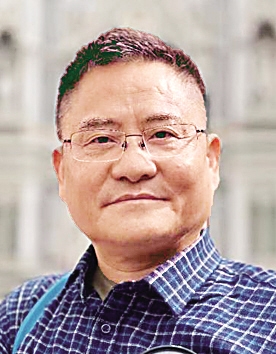
Xiang Yunju
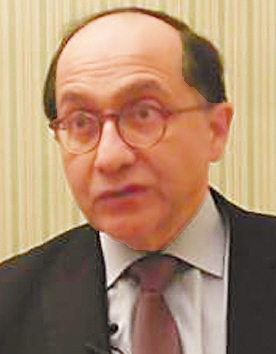
Jean-Franç ois di Meglio
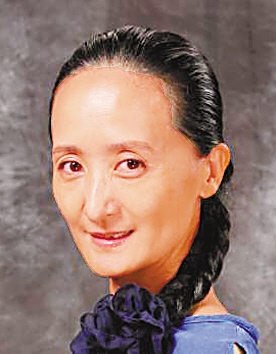
Feng Ying
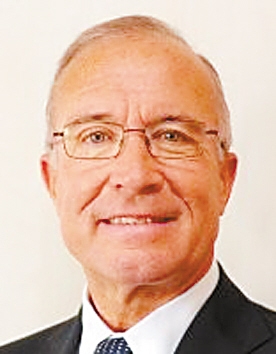
Franç ois Guntan
(The pictures in this edition are provided by the conference organizer.)
"2019 Paris Consensus" of the Sino-French Civilization Dialogue
We, representatives of Chinese and French intellectuals, cultural and artistic circles and international organizations, gathered in Paris from October 21 to 22, 2019 to participate in the Sino-French Civilization Dialogue and discuss the plan of Sino-French civilization exchange and mutual learning.
We believe that culture and civilization are inexhaustible motive forces for promoting the development and progress of human society and building a community of human destiny. It is our common aspiration to carry out the dialogue between Chinese and French civilizations, and it is also a great cause that needs our unremitting efforts. China and France should set an example and lead the world in strengthening dialogue and exchanges between civilizations, coping with global challenges and promoting world peace and sustainable development.
We can see that China and France, as representatives of the two major civilizations of the East and the West, are committed to maintaining the diversity of human civilization, jointly raising the banner of multilateralism and improving the global governance system, and have become an important force in maintaining world peace and stability and promoting the progress of human civilization.
We suggest that different civilizations coexist on an equal footing and harmoniously, cherish and respect each civilization, and let the diverse civilizations of various countries and nationalities achieve the vitality of the human planet.
We suggest that different civilizations appreciate each other, tolerate each other, learn from each other’s strong points in dialogue and exchange, and provide value guidance and spiritual support for mankind.
We suggest that different civilizations help each other and cooperate together, so that the achievements of various civilizations can become valuable wealth shared by mankind and ensure world peace, development, prosperity and stability.
We hope to take this meeting as an opportunity to carry out regular civilized exchanges and dialogues, build a communication platform, learn from the wisdom of civilization, promote the communication between the people and let the light of civilization better illuminate the human planet.
editorial comment/note
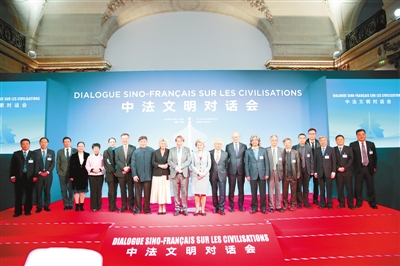
The Sino-French Civilization Dialogue, hosted by the Press Office of the State Council, China, and jointly hosted by the Chinese Foreign Languages Bureau and the French "Bridge" think tank, was held in Paris from October 21st to 22nd.
Wang Yi, State Councilor and Foreign Minister of China, Jiang Jianguo, Vice Minister of the Propaganda Department of the CPC Central Committee, laurent fabius, Chairman of the French Constitutional Council, dominique villepin, former French Prime Minister and irina bokova, former Director-General of UNESCO, attended and delivered speeches. More than 200 representatives from the Chinese and French governments, well-known experts and scholars, outstanding figures in the field of culture and art, and executives of Sino-French cooperative enterprises attended the meeting. Representatives of the two sides held frank exchanges and in-depth dialogues around the conference theme of "Dialogue among Civilizations and Mutual Learning: Building a Community of Human Destiny" and contributed their thoughts and wisdom.
Let the light of human civilization of equality, tolerance and cooperation shine forever.
Wang Yi (State Councilor and Foreign Minister of China)
As important representatives of eastern and western civilizations, China and France have each created profound and excellent cultures, which, like two bright pearls, complement each other in the long river of human history. Not only that, the cultural exchanges between China and France have a long history. In the past hundreds of years, we have always appreciated each other and learned from each other, which has become a model for exchanges and mutual learning between different civilizations.
As early as the Western Renaissance and Enlightenment, many French thinkers, including Voltaire, had a strong interest in China culture and advocated that Europe should learn from China’s rational spirit. In 1688, King Louis XIV sent the first batch of "the king’s mathematicians" to China, which played a positive role in promoting Sino-French scientific and cultural exchanges. Gu Hongming, a master of Confucianism in modern China, once said in the famous book "The Spirit of China": "It seems that only the French understands the civilizations of China and China best in the world, because the French has an extraordinary spiritual quality as Chinese."
After the founding of People’s Republic of China (PRC), Sino-French relations and Sino-French cultural exchanges opened a new chapter. In 1964, France became the first western power to formally establish diplomatic relations with New China, and the first cultural center established by China in the west was located in Paris. The "Sino-French Cultural Year" started the trend of holding cultural years with foreign countries in China. In March this year, the Chairman of the Supreme Leader paid a historic visit to France. During the visit, President Macron presented a French version of A Guide to the Analects of Confucius, which was first published in 1688, to President Xi as a national gift, which once again wrote a wonderful story about the encounter between eastern and western cultures. Later, I will co-chair the fifth meeting of the Sino-French high-level people-to-people exchange mechanism with Foreign Minister Le Drian. We will implement the important consensus of the two heads of state on strengthening civilized exchanges and mutual learning, and push the Sino-French cultural exchange to a new level.
The world today is facing a great change that has never happened in a hundred years. Whether countries are heading for conflict or prosperity, and whether history is heading for retrogression or progress, largely depends on how we treat and deal with the differences between different civilizations. As two civilized countries, China and France are fully capable of providing answers for mankind, that is, they should have a pair of eyes to appreciate the beauty of different civilizations, have a broader mind than the sea and the sky, and let the light of equal, inclusive and cooperative human civilization shine forever.
We should treat each other as equals and let different civilizations have their own beauty. There is no distinction between superior and inferior civilizations. Every civilization is rooted in its own soil, has advantages and advantages, and has become the common wealth of mankind. Chinese civilization advocated "harmony but difference" more than 2000 years ago, stressing that "all things coexist and do not harm each other, and Tao is parallel but not contradictory". We oppose any form of "theory of superiority of civilizations" or "theory of clash of civilizations", and advocate respecting all countries and nations to inherit and develop their own civilizations and independently choosing a development path that suits their national conditions, so that our world can blossom and become more colorful.
We must persist in openness and tolerance, and let the beauty of different civilizations. History tells us that selfish and narrow civilizations are doomed to be unsustainable, and only by appreciating, accepting and constantly learning from other civilizations can any civilization last forever. This is the case in China and France. All countries should treat other civilizations and the progress of other countries with a rational and inclusive attitude, and should not put their own interests above other countries. Confucius, a sage in China, said, "Don’t do to others what you don’t want others to do to you", while Mencius pointed out that "if you love others, you will always love them; Those who respect others will always respect them. " Different countries and civilizations should respect each other, understand and accommodate each other, and pay more attention to the beauty of adults than the evil of adults, so as to achieve mutual success and common development.
We must persist in cooperation and progress together, so that different civilizations can share beauty and beauty. In the past few decades, globalization and informatization have completely broken geographical isolation and provided unprecedented convenience for countries to strengthen mutually beneficial cooperation and achieve collective prosperity. Facts have proved that cooperation is the only correct choice, self-isolation is inappropriate and unilateralism is unpopular. In recent years, the Chairman of the Supreme Leader has put forward a series of important initiatives, such as jointly building the Belt and Road Initiative and building a "community of human destiny", which is a new major contribution made by the ancient Chinese civilization to mankind in the 21st century. Under the guidance of these initiatives, we are willing to uphold and carry forward the concept of multilateralism, deepen cooperation with other countries and make unremitting efforts to promote the overall development and progress of human civilization.
Draw on the wisdom of civilization, promote the communication between the people and make joint progress towards the goal of realizing the dream of China and France.
Jiang Jianguo (Deputy Director of Propaganda Department of CPC Central Committee)
Just now, State Councilor and Foreign Minister Wang Yi’s speech profoundly expounded the important proposition of solving the difficult problems of international relations through civilized exchanges and mutual learning. President fabius’s speech expressed his unique views on the common development of diverse civilizations. The speeches of the two leaders set the tone and provided guidance for our dialogue. Here, I would like to share with you my understanding of the exchange and mutual learning between Chinese and French civilizations with a few symbolic historical symbols.
The first symbol: "One Road". The exchange of civilizations and mutual learning is the main driving force to promote human progress. More than 2,000 years ago, with the simple desire of friendly exchanges, our ancestors opened up the ancient Silk Road and opened an era of great exchanges in the history of human civilization. On this road, the Chinese and French people, together with the people of other countries, constantly deepen their understanding of different civilizations, appreciate their charm, and learn from their strengths in an open and inclusive manner. A large number of facts have fully proved that exchanges and mutual learning among civilizations can make the fruitful achievements created by different civilizations shared by all mankind. It is also the communication on this road that makes China and France stand on the highland of world civilization and become bright pearls that reflect the two civilizations of the East and the West.
The second symbol: "A book". President Macron presented The Analects of Confucius, published in France in 1688, to the Chairman of the Supreme Leader, evoking a precious memory in the history of Sino-French civilization exchange. "Sinology spread to the west" and "European learning spread to the east" is a legend that eastern and western civilizations met and learned from each other, leaving a deep imprint on the history of world civilization. Confucian classics such as Confucius’ The Analects of Confucius have had an important influence on the philosophical thoughts of Montesquieu and Voltaire. Facts have fully proved that learning from each other between China and France is like lighting another lamp, which can not only illuminate the way forward for the two peoples, but also make the world a better place.
The third symbol: "a group of people". 100 years ago, a group of ambitious young people from China came to France not far from Wan Li with longing for the progress of French civilization, seeking the truth of saving the country and the people and the good prescription for transforming old China. Enthusiastic French people opened their arms to these young people who failed to study, helping them to reserve knowledge and skills for serving their motherland. Some of them have become outstanding leaders of New China, while others have become outstanding talents in the fields of science and technology, culture and art. What I want to say here is that the people of China always remember those who helped them and should be good friends with them from generation to generation. The seeds of Sino-French friendship sown by our ancestors have already taken root and sprouted in the storms of the years and grown into towering trees.
The fourth symbol: "a word". General de Gaulle said in those days: "China and France have deep admiration and respect for each other, and the obvious tacit understanding between the two countries will one day develop into a deeper and deeper cooperation." We are very happy to see that since President Mao Zedong and General De Gaulle made the historic decision to establish diplomatic relations in an all-round way, China and France and their peoples have respected each other, treated each other as equals, supported each other and cooperated closely, and Sino-French relations have become a model of win-win cooperation between different systems and cultural traditions.
The fifth symbol: "a dream". At the commemorative meeting celebrating the 50th anniversary of the establishment of diplomatic relations between China and France in 2014, the Chairman of the Supreme Leader said: "I sincerely hope that China and France and the two peoples will understand each other, pay attention to each other and jointly realize the ‘ Sino-French dream ’ 。” During his first visit to China in 2018, President Macron said: "We live in an era when France and China can share a dream. This is exactly what I expect from Sino-French relations. " The words of the two heads of state made us deeply realize that the Chinese dream and the French dream are interlinked, and we share a "Sino-French dream". Realizing the "China-France Dream" is a process of deepening the exchanges between Chinese and French civilizations and promoting win-win cooperation between the two countries.
Carrying out the dialogue between Chinese and French civilizations is a cause for which both China and France are striving. Today’s dialogue is a useful attempt and a new beginning. I believe that the Sino-French Civilization Dialogue will surely become an ideological feast for exchanges and mutual learning between Chinese and French civilizations!
Laurent fabius (President of the French Constitutional Council)
Sino-French dialogue is not only a meeting to discuss, but also a practice of the common future of the two countries and the future of the whole world. The civilizations of China and France are different, and they are different in education, history, land area and neighboring countries. That is why it is more important to have a common vision and unite. In 1964, Charles de Gaulle and Mao Zedong decided to establish diplomatic relations between the two countries, and France was the first western power to establish diplomatic relations with China. During my 40 years in politics, I kept in touch with my friends in China. Recently, our two countries have strengthened ties and exchanged frequent high-level visits, which further shows that our ideas are the same. Although we are different, we still have something in common.
First of all, both China and France have the long-term idea of establishing long-term ties. This is the case in China, and it is also the case in France. Instead of looking at short-term interests, we can foresee the future, overcome short-term difficulties, and look at problems from a long-term perspective.
Secondly, both China and France have the spirit of openness. In the history of our two countries, we were tempted to close up, and in the end we both chose to open up, so we are very proud. Now many countries, especially big countries, are becoming more and more closed. However, China and France are not like this, which shows the importance of the road we have traveled together.
Finally, we all attach importance to finding a balance, which is what Wang Yi said: seeking common ground while reserving differences. There are many threats in the world today, and the biggest threat is the threat against multilateralism. Some people do not accept multilateralism more and more. China and France, two great countries, should find solutions to their difficulties under the principle of multilateralism and seeking common ground while reserving differences. We can find new knowledge by studying history, and those who can do this are great masters. In the future, let everyone become such a person and wish the Sino-French Civilization Dialogue Conference a complete success.
Dominique villepin (former French Prime Minister)
At present, the world is facing an unprecedented crisis, which is comprehensive and threatens the social, economic, political and international relations system for decades.
At present, various international relations systems are complicated, and now bipolar, multilateral and unilateral relations are intertwined. Moreover, we can see that there is still a tendency of power politics in the current international system. Today’s world is facing a crisis of trust. Since 1945, people’s confidence in peace, stability and social justice has been shaken. There is also a tool crisis, the United Nations system, the international currency, the World Bank, and so on. The United States left UNESCO because it questioned the efficiency of international organizations.
So, what should we do? We should start with civilization. The clash of civilizations will lead to a kind of self-isolation. Protectionism has become more and more popular after the "9.11" incident, extremism has spread to the west and south, and we have also seen many conflicts, especially in the Middle East and Libya. There is also a trend of blocking among civilizations. We see that some people provoke sanctions or disputes easily. The obvious example is the Sino-US trade dispute. There are also risks of war in many places. World War I was the destruction of world civilization, and France fought side by side in World War II. War is a brutal destruction of civilization.
In addition, we also face two major challenges, one is selfish globalization, which benefits us for our own interests, and the other is environmental challenge.
I make three suggestions, which are very urgent. The first is that our diplomacy must be devoted to common interests. People of all countries must be equal, and all civilizations are equal to each other. Peace is very important. I think the United Nations Military Academy and the General Staff are a good idea, because we are all facing the crisis of terrorism. France and China are both victims, and China and France can join hands with all parties to combat extremism from the global level. The second is to protect the environment, and it is urgent to establish a global carbon market. The 11% increase in global emissions is due to deforestation. The third is culture. Many China artists have lived in France, and they have made great contributions to the cultural exchanges between the two countries. Especially in literature and art, cultural diversity is very important. In addition, we should emphasize multilateralism, promote pragmatic diplomacy through cooperation, and ensure regional scientific and cultural cooperation. France provides assistance to Africa, and China also provides assistance to Africa under the Belt and Road Initiative. Tripartite cooperation should be promoted and a permanent secretariat should be established.
China and France have the responsibility to contribute to global culture and play the role of thought laboratories.
Irina bokova (former Director-General of UNESCO)
Thank you for inviting me to attend this conference to discuss the multipolarization of culture and the world. How to protect civilization in diversity is a very important topic. Respect for international law is the only way to maintain peace. We can only meet the challenge through cooperation. We respect diversity, so we are United. China and France can play an important role. Both countries are defenders of multipolarization, and both countries firmly believe in the role of culture in development. Today’s conference brings us more opportunities. We have seen great changes brought about by technology, information and communication, which have lifted thousands of people out of poverty and closely linked globalization and localization. But society and individuals are increasingly divided. How can we protect peace?
Humans form a big family, sharing the earth and sharing diversity. We have been looking for this solution. Because another culture may bring conflict, even exclude others and destroy cultural heritage. Some people reject others according to religious standards, think that different ethnic groups cannot coexist peacefully, and think that the world should go back to the past. We should oppose isolationism and respect other cultures. All cultures can learn from each other and make people feel more belonging.
The thousand-year history of the Silk Road is a dialogue among nations, religions and knowledge. These past exchanges have brought more exchanges and innovations. More culture and art are handed down from generation to generation. The culture of the Silk Road shows that no culture can develop alone. The Silk Road is an important exchange, through the exchange of economy, trade and commodities — — Not only that, but also innovation and identity exchange bring dialogue.
Once upon a time, the Silk Road was a social network, which linked people together and told the history of human learning from each other. No culture developed alone, and human civilization learned from each other. The Silk Road was an important and lasting development and a soft power. Only in this way can we find solutions to all social challenges in different languages and cultures.
In the past few years, we have been constantly innovating and expanding the concept of our culture, which shows that our culture and history should be preserved and shared.
Culture is rooted in the people and affects our ideas. Every culture is alive and constantly evolving. The end result is a beautiful world.
Diversity is reflected in the world heritage. It can be said that in the past century, although these heritages belong to different cultures, they represent common values. Cultural differences will not divide us, but will unite us. There are 45 cultural heritages in France and 55 in China, both of which are countries with more cultural heritages. Once again, I congratulate a heritage in Liangzhou, China, and a cultural heritage in Zhejiang on being included in the World Cultural Heritage List in July.
All ethnic groups in the world must exchange innovations and create contacts, so that diversity can be used by us. Sino-French culture is profound, with heritage and innovation, and at the same time, it is integrated with tradition and innovation. There are more than 1000 museums in France, and 200 cultural institutions manage all kinds of archives.
When a country awakens, the first thing is the awakening of culture. China knows that culture is cohesive and can promote economic development. China’s cultural industry has developed very fast, and a lot of work has been done in cultural inheritance. In 2015, China’s investment in culture is also increasing, which shows that culture can promote social and economic development and bring innovation.
The experience of China and France shows that culture can be constantly innovated. To encourage human beings to expand their imagination and see further, human beings need this ability to see further.
Dan Jixiang (former president of the Palace Museum)
In 2013, the Chairman of the Supreme Leader first proposed the idea of jointly building the "Silk Road Economic Belt" and the "21st Century Maritime Silk Road". This grand idea spanning time and space and a magnificent blueprint bear the dream of development and prosperity of all countries. China and France are both trade centers and cultural hubs connecting the East and the West. After thousands of years, they have witnessed the historical chapter of camel bells ringing and boats facing each other. Thousand-year-old kinship, Wan Li tea fragrance, the ancient and youthful Silk Road, closely linked the two civilizations, exchanged ideas and learned from each other.
France has nurtured an ancient civilization that has lasted for thousands of years, and has gone through a tortuous and long road of self-improvement. Its splendid scientific culture, rich artistic creation and stirring philosophical thoughts have been the treasure of human civilization for thousands of years. France has always been at the forefront of the world in terms of cultural heritage protection and museum construction. Sino-French cultural exchanges are constantly emerging with great vitality, and the future is even more enviable. In recent years, the museums of the two countries have carried out a number of practical cooperation, including collection research, cultural relics restoration, education and training, and academic exchanges. In these activities, the ancient civilizations of the two countries have given off new splendor, written many stories of cultural exchanges, and expanded mutual understanding among the people.
Justin Vais (President of the Paris Peace Forum)
China and France, two great civilizations, span thousands of miles and attract each other. I think the theme of culture can connect two civilizations. Both civilizations can transcend geographical boundaries. Both China and France have foresight and ideas. We talk about cultural communication, that is, soft power, which means that the power of culture can attract other countries.
Our two countries can’t just look at each other, but also look in the same direction, how our institutions handle bilateral relations, which not only promotes Sino-French relations, but also brings many achievements in Sino-French cooperation. What is the meaning of discussing civilization? It is how to manage the earth in a good way, coexist harmoniously on the earth, and pay attention to the future, which also involves biodiversity, climate change and so on. This is also where Chinese and French civilizations can play a role.
Zhang Weiwei (Professor, China Research Institute, Fudan University)
I regard the rise of China as the greatest event in the 21st century. China has gradually taken the lead in some fields from backwardness to catching up. Now China has entered the fourth industrial revolution marked by big data and quantum communication, as well as AI and artificial intelligence. China is now in the first phalanx, which has changed the international situation. The rise of China is different. I call it the rise of a civilized country. Its definition is that an ancient civilization that has not been interrupted for thousands of years and a super-large modern country are almost completely superimposed.
China and France have a long history, and both have fine traditions and are tolerant. Great Enlightenment thinkers like Voltaire and Diderot, their spirit is essentially emancipating the mind and seeking truth from facts. Under the guidance of this spirit, I believe that the dialogue between Chinese and French civilizations will get better and better, and Sino-French relations will get better and better.
Dieu Benaim (Fellow of Communication, French Academy of Arts, Representative of China Affairs)
The French Academy of Fine Arts may not be well known, but many people in Chinese know it very well. The Monet Museum and the Monet House in giverny have many tourists from China. We have a long history with China.
China and France are very close. I have been to the National Museum of China and once saw a bronze vase, which may be 3000 years old. I can see the sculptor’s gestures and tools at that time, which shows that artistic techniques and feelings spanning 3000 years can be exchanged. When organizing the exhibition, what moved me most was the audience in China. China audiences come from all ages and cultural backgrounds. I remember a girl from China, maybe 15 years old, who watched a sculpture for at least 15 minutes. I was very moved that we couldn’t see such a dedicated audience in France.
Wu Weishan (curator of China Art Museum)
In the China Cultural Center on the Seine River, which bears the profound history of France, flows with the blood of French culture and reflects the light of French wisdom, there stand two bronze statues of China saints, Lao Zi and Confucius. The theme of the performance is that Confucius asked Laozi. This is a widely circulated historical allusion. This group of sculptures points out Chinese’s modesty to learn from others, and also points out that the China Cultural Center is a platform for asking questions to the world. Only by combining questioning and preaching can we have a wide-ranging dialogue around the world. Only through dialogue can we communicate our hearts, integrate our emotions, enhance our understanding and seek common development.
Dialogue, as a rational form of communication between different civilizations, has now become a mighty worldwide trend. The ancient Silk Road once demonstrated for us the glory of civilized dialogue and win-win cooperation, and at the same time inspired us with hope for the future.
Liu Ye (a famous actor in China)
In 2001, I participated in a film co-produced by China and France called Balzac and the Little Tailor of China, which was adapted from the best-selling novel of the same name by Dai Sijie, a Chinese writer living in France. It was my first time to cooperate with a French filmmaker, and we discussed the understanding of film aesthetics at most after shooting. France was the first western country to introduce China films, which made many people interested in China’s aesthetics and culture.
My wife Anna is a French girl, born in Nice. Every time I come to France, I will be called Nice son-in-law, and my wife will be called Northeast daughter-in-law in China. My two children like reading Tang poems and singing "On the Bridge of Evignon" (a famous French nursery rhyme). Children are the future, and the future of Sino-French friendship depends on them.
Chiala Colazza (President of the French Women’s Economic and Social Forum)
I have been promoting France, stressing its attraction and attracting investment. Now I want to go to China, and I want to see the role of China. Moreover, China has great potential, and men and women in China can work together to create the future.
Now we are very concerned about four themes. One is climate, and we hope that women will also sit at the negotiating table and participate in climate negotiations. It is necessary to study how to increase women’s participation in climate action. The second area is how to obtain funds, especially women’s entrepreneurship. We want more women to become entrepreneurs and create jobs and wealth. Another theme is science, artificial intelligence and so on. Women should be given more opportunities in these fields. There is also the need to encourage women to participate in the work of changing society. Improving women’s participation in science is also a major theme of civilization.
Jean Christopher Bass (CEO of the Institute for Dialogue among Civilizations and Senior Advisor for Strategic Development and Cooperation of the United Nations Alliance of Civilizations)
It has been 30 years since the fall of the Berlin Wall. At that time, many people thought that the collapse of the Berlin Wall meant the end of an era, and the era of universal and single values and world outlook would come. But in fact, the status quo after 30 years is quite different from what these people originally imagined. The rise of the BRICS countries and the changes in the world’s economic and financial structure have made them feel deeply worried. The development of BRICS countries not only involves the economic level, in fact, the strengthening of BRICS countries has also brought the values of emerging countries to the world. In the past, we talked about the concept of "nation state", but now it is a "civilized country". "Civilized country" is built on the cultural accumulation of thousands of years, and its role in international communication is becoming more and more important.
Mai Jia (a special expert in Zhejiang Province and a full-time writer in Hangzhou Federation of Literary and Art Circles)
In my exchanges and mutual learning with readers from all over the world, I deeply feel that in this era of "the world is flat" and "the community of human destiny", dialogue and exchanges between different civilizations are particularly important. Communication and dialogue are the most effective ways to eliminate misunderstandings, reduce conflicts and correctly recognize each other. Economic and trade exchanges are exchanges, sitting together for meetings and dialogues are exchanges, and reading and inheriting each other’s literary and artistic works are also exchanges. We hope that all countries in the world can share China literature as much as we share world literature, and learn more about China from it.
Today’s writers in China are lucky enough to learn from the outstanding achievements of world literature, and at the same time, they are in a great period of vitality, prosperity and national security. The passionate, multi-level and multi-faceted life provides inexhaustible creative water for China writers.
Meng Man (Professor, School of History and Culture, Minzu University of China)
How should we face our own cultural traditions? Confucius is called a saint in China. Confucius is the most important symbol of China culture, whether in France or in other countries. In Confucius’ view, his most important job is to protect and pass on Zhou culture, which is actually order and harmony. Among Confucius’ contemporary thinkers, Confucius seems to be the most conservative one, but it is also the one who has gone farthest. To this day, we are still deeply influenced by him. For example, when dealing with different cultures, we will talk about "harmony without difference" and "don’t do to others what you don’t want us to do to you", which are all Confucius’ sayings. I have lived in the north of China since I was a child, and my favorite fruit is apples. And France is famous for its wine. Isn’t culture the same? The most important meaning of communication is that you and I both know each other, understand each other and appreciate each other. Eat your own fruit and taste the fruit of others, so that your mouth can be full of rich flavor.
Hervé Barbale (former Secretary-General of French Ministry of Culture and former Deputy Director of Louvre Museum)
One thing in common between Chinese and French civilizations is that they have a long history, so our dialogue should be more fruitful. There are differences between us, and we should admit that we have differences. We often hear the word "harmony", but harmony does not mean to converge, but to be harmonious and different, and admit that we have different opinions. On this premise, we should move forward together through civilized dialogue and build a more fruitful future.
Museums can be said to be a theme in the traditional values of France, that is, these works are national, but at the same time they are shared by human beings. The museum shows the long and visible history of mankind. As a museum professional, what touches me most is that the dialogue between civilizations is very active. In the past few centuries, this kind of dialogue has been a great impetus to human development.
Zhao Xiaoxing (Deputy Director and Research Fellow, Institute of Literature, Dunhuang Research Institute)
Dunhuang has been at the crossroads of eastern and western civilizations since ancient times. Openness, tolerance, pluralism and mutual learning have always been the attributes of Dunhuang culture. Our research on Dunhuang studies is also based on international cooperation and exchanges. Since 2014, we have held an international academic conference "Dunhuang Forum" every year, providing a platform for Dunhuang researchers all over the world to exchange and inspect Dunhuang. We also actively send scholars from our institute to participate in international conferences and international cooperation. Among them, two visiting scholars are sent to the East Asian Civilization Research Center of the French National Academy of Sciences every year. Here, I would like to express my heartfelt thanks to my French colleagues who have been helping us! I also hope that in the future, we can further carry out cooperative research on Dunhuang ancient Tibetan literature in the French National Library and Dunhuang artworks in the Asian Art Collection in Ji Mei.
Shi Fei (former Minister Counsellor of the French Embassy in China and former Ambassador to the Philippines)
There are two ways to spread values, one of which is through war and revolution, but forcing others to accept the values of freedom is against freedom itself. Napoleon forced the promotion of French in Slovenia, but the country’s language and cultural characteristics also remained. The spread of French culture in this period was behind a high degree of centralization.
We learned from Confucius and China, and implemented the examination system. People born in poverty like me can also become diplomats. French is the language of diplomats, the official language of the United Nations, and the official language of NATO. There are 550 million people studying French and French culture in the world, and there are 17 French Union centers in China.
Shen Jian (Professor of Zhejiang University, President of China French History Research Association)
China French History Research Association is one of the earliest national academic mass organizations since the reform and opening up. It has been 40 years since its establishment in August 1979. In the past 40 years, through the efforts of several generations of scholars and researchers, the Research Association has vigorously promoted and carried out the research and teaching of French history in China, strengthened contacts and exchanges with foreign counterparts, and achieved fruitful results.
With the joint promotion of China and France, since 2003, the Research Association has begun to implement a plan for academic exchanges between Chinese and French history and culture. Every summer, we invite some famous French historians to China to teach young scholars and graduate students in China together with China scholars. Through exchanges, we have trained a large number of talents in the study of French history.
Luo Guoxiang (Director, Center for French Studies, Wuhan University)
After World War II, cultural exchanges between countries have become more frequent and fruitful. However, we also see that there are still political, economic and cultural disputes in today’s world, and the world is still not peaceful, which urgently requires us cultural researchers to do a very important job: to find and establish a harmonious world with sustainable and stable development.
In my opinion, French culture with respect for diversity as its core value and China Confucianism that Voltaire once admired and used for reference can be one of the options to solve the above problems. Confucius once said to his disciple Zilu, "Gentlemen are harmonious but different, while villains are at odds.". It can be said that the principle of "diversity and harmony", which is the mainstream in Chinese and French cultures, can make our world fairer not only in the cultural sense, but also politically and economically.
Liu Shaowen (Vice President of China Cyberspace Research Institute)
After 50 years’ development, the Internet has become the main channel and platform for cultural exchange. The achievements of various civilizations are widely gathered, easily flowed and spread around the world in digital form. Cyberspace has increasingly become the common spiritual home of all mankind, providing a broad space for protecting and displaying the diversity of human civilization.
China and France have a long history of civilization and profound cultural heritage. It is of great and far-reaching significance to deepen the cultural exchanges between the two countries by using online channels to enhance the friendship between the two countries and promote the communication between the people. We should adhere to the principle of equality and respect, let people of all countries know each other about the world’s outstanding cultures through the Internet, take the vision of jointly building an online cultural exchange platform, promote multi-level, multi-dimensional and multi-field cultural dialogue, respect multiculturalism, safeguard cultural diversity, and truly realize the beauty of different cultures and diverse civilizations, the beauty of beauties, the coexistence of beauty and beauty, and harmonious coexistence.
Deborah Frett (Director of Development, French Institute for Advanced Studies in Social Sciences)
Confucius said, "A gentleman seeks himself, while a villain seeks others". In 1617, the German enlightenment thinker LeMonetz read the Latin translation of The Analects of Confucius. He said that it brought him a lot of gains, and his learning content was related to the French Revolution. I once saw an article written by Chinese. When talking about the translation of The Analects of Confucius, this article mentioned that the final English version was actually translated from the French version, and these translations were actually done by an American translator. If this is connected in series, we can speculate that Martin Luther King may also be influenced by The Analects of Confucius.
The French version of The Analects of Confucius wrote, "The only goal of philosophy is to constantly improve yourself and others. Self-improvement is a must and a prerequisite for improving others. " Nowadays, society is becoming more and more materialistic, so we should review the thoughts of ancient thinkers.
Emmanuel Linko (Professor, China Political and Art History Expert, Sinologist).
Every country and every civilization share common values with other countries and have their own unique traditions. Civilization includes ideology and values. When French historians refer to China civilization, it has the color that Europeans see the world. the French called this view Orientalism. Corresponding to Westernism, for example, oriental scholars look at the West with oriental colors. Some scholars also believe that western civilization is a realistic civilization, and the west has dispersed and imposed its values on various regions through war and colonization.
Sino-French cultural exchange is to fight against barbarism, and the opposite of civilization is barbarism, which is terrorism. Both China and France face the threat of terrorism. Al Qaeda has destroyed many world cultural heritages. In the name of civilization, we should crack down on barbarism, and China and France should cooperate in this respect and jointly oppose terrorism.
Xiang Yunju (Executive Vice President and Secretary General of China Literature and Art Foundation)
China’s present achievements have been developed through exchanges and mutual learning among civilizations. The people of China are willing to dedicate this great and valuable experience to the world, and China is also willing to put forward China’s plan for world peace and development: building a community of human destiny. Promoting the exchange and integration of human civilizations and learning from each other is the only way to make the world more beautiful and people of all countries live a better life. The community of human destiny, political multipolarity, diversity of civilizations, economic pluralism, sovereign equality, national independence and freedom of personality are mutually external and internal, which is the theory of dialectical unity of human commonness and individuality, and the inevitable conclusion of China’s cultural cosmology of harmony between man and nature, harmonious but different social outlook, people’s heart and good moral outlook.
The community of human destiny pursues and promotes exchanges and mutual learning among civilizations, and resolves and transcends conflicts and hostility among civilizations. China culture will embrace the openness of the times and world civilization, and the Chinese nation and Chinese excellent traditional culture will also achieve great rejuvenation through creative transformation and innovative development.
Jean-Franç ois di Meglio (President of French Center for Asian Studies)
I have been following China for over 40 years. At the moment, we mainly discuss the communication between different ideologies and cultures. The dialogue between China and France has a long history. The furniture decoration in France in the 18th century was deeply influenced by China style, which shows that France recognized China art..
China’s civilization itself is diverse, so we should have a dialogue with all forms of expression, instead of generalizing. China civilization also has different forms of expression in contemporary art. When it comes to China’s civilization, the first thing we think of is contemporary art, but when it comes to civilization, it actually includes cultural diversity, which enables us to have a dialogue with other cultures. Chinese civilization is bigger than China itself. Speaking of Chinese civilization, in addition to local roots, we should also consider the cultural elements of Southeast Asia and overseas Chinese gathering places. Chinese civilization has gone beyond the territory of its own country.
Feng Ying (Head of the Central Ballet)
History has proved that the real world of "harmony but difference" has created the inevitability of civilization diversity and world multipolarization. The trend of civilization’s advancement and development has enabled mankind to form a community of destiny more closely, and in the future, they will all be brilliant and join hands to sail to a broader sea of stars. This development law of "different but identical, same but different" can be found everywhere in the history of human civilization. Of course, ballet art is no exception. Today, when we appreciate the romance of Italian and French ballet, the innovation of British and German ballet, the unrestrained Russian ballet, the casual and natural American ballet, and the delicate China ballet, it is not difficult to find that although each school is colorful, while adhering to the inheritance, all schools invariably place their future development in the international art vocabulary to explore new ways of contemporary trends, which can be described as hand in hand and diversified development.
Franç ois Guntan (former Chairman of the French Board of Directors of Huawei Technologies and Chairman of the Research and Strategic Prediction Center)
In cooperation with different countries, we are faced with differences in different cultures and languages. For entrepreneurs, if they want to carry out business smoothly in any country, they must have a deep understanding of local customs and culture, which cannot be obtained only by reading newspapers.
The world is now facing multipolarization, and the situation is not as simple as it was 20 or 30 years ago. In the past, we used a single language, and the business model was gradually integrated, but now it is multicultural. Therefore, it is more difficult to become a multinational enterprise than before. The diversified characteristics of the team require that large international groups in the future must absorb cultural courses in the leadership training courses and incorporate culture into the group strategy, otherwise it will be difficult to operate. Knowledge sharing can transcend the challenges brought by cultural diversity, which is also a challenge that enterprises must overcome.